Cemented Carbide Blades Wear Characteristics in Drilling Limestone Ⅶ
- Category: Tungsten Information
- Published on 09 September 2015
4. Conclusions
This paper investigates wear characteristics of the cemented carbide blades in the process of drilling limestone with water jet. The wear mechanism of the blades when water jet is employed in rock drilling process is also studied. The conclusions could be summarized as follows:
1. The pressure of water jet plays an important role in the wear rates of cemented carbide drill bits in rock drilling with water jet. The wear rates decrease with the increasing of the jet pressure. But the decline speed of wear rates is not even. It declines more and more slowly when the jet pressure is over 10 MPa
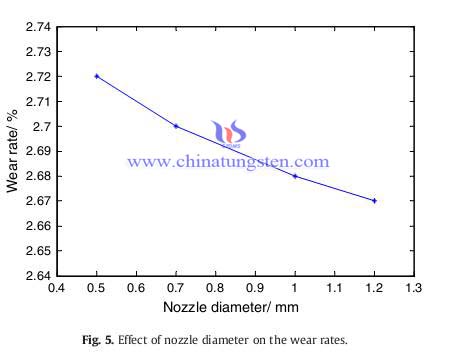
2. Reasonable nozzle structure can improve the wear resistance of the cemented carbide blades. Moreover, increasing the diameter of the jet nozzle could decrease the wear rates of blades.
3. Surface analysis demonstrated that cemented carbide blades in limestone drilling with water jet shows circular action of brittle fracture, grain pullout and polishing, which induces material removal process.
Tungsten Carbide Manufacturer & Supplier: Chinatungsten Online - http://www.tungsten-carbide.com.cn
Tel.: 86 592 5129696; Fax: 86 592 5129797
Email:
Tungsten & Molybdenum Information Bank: http://i.chinatungsten.com
Tungsten News & Tungsten Prices, 3G Version: http://3g.chinatungsten.com
Molybdenum News & Molybdenum Price: http://news.molybdenum.com.cn
Tungsten Carbide Ball Description II
- Category: Tungsten Information
- Published on 08 September 2015
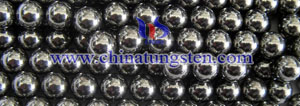
At present, the common types of tungsten carbide ball are YG (W and Co), YN (W and Ni), YT (W, Co and Ti) and YW (W, Ti, Ta and Co) and so on. In terms of tungsten carbide grades, it can be specifically divided into YG6, YG6X (fine particles), YG8, YG13, YG20, YN6, YN9, YN12, YT5, YT15, etc. The common specs haveΦ2、Φ4、Φ6、Φ10、Φ50 and so on.
Tungsten carbide nozzle has high hardness and excellent wear resistance so that the prospect and the field of application is broad, such as fine bearing, instrument control, stretching, coating, mechanical parts, water pump, seal components, impact hole, oil field, braking pump, laboratory, hardness measuring (Rockwell hardness), balancing weight and some other high-end field. In addition, according to different requirements and parameters, tungsten carbide ball products include that tungsten carbide ball, tungsten ball, heavy alloy ball and so on. The smallest diameter of tungsten carbide ball is about 0.3.
Tungsten Carbide Manufacturer & Supplier: Chinatungsten Online - http://www.tungsten-carbide.com.cn
Tel.: 86 592 5129696; Fax: 86 592 5129797
Email:
Tungsten & Molybdenum Information Bank: http://i.chinatungsten.com
Tungsten News & Tungsten Prices, 3G Version: http://3g.chinatungsten.com
Molybdenum News & Molybdenum Price: http://news.molybdenum.com.cn
Tungsten Carbide Ball Description
- Category: Tungsten Information
- Published on 08 September 2015
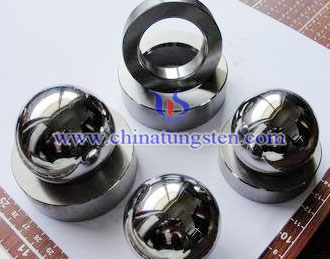
Tungsten carbide ball, also known as tungsten ball, which is made of cemented carbide. Due to its high hardness (usually ≥ 90.5 HRA), high density (reaches 14.9 g/cm3), excellent bending strength, good wear resistance and anti-corrosion, it can widely take place of steel ball in applications and remarkably improving the properties. Tungsten carbide ball is a kind of powder metallurgy products, which uses refractory metal carbide with high hardness (e.g., WC, TiC) micron powder, and cobalt (Co), molybdenum (Mo) or nickel (Ni) or others as a binder for vacuum sintering other the methods.
The special manufacturing process also increases the cost. However, it not only has excellent physical properties, but also has stable chemical properties, which is non-reactive with other types of acid or alloys at high temperatures.
Tungsten Carbide Manufacturer & Supplier: Chinatungsten Online - http://www.tungsten-carbide.com.cn
Tel.: 86 592 5129696; Fax: 86 592 5129797
Email:
Tungsten & Molybdenum Information Bank: http://i.chinatungsten.com
Tungsten News & Tungsten Prices, 3G Version: http://3g.chinatungsten.com
Molybdenum News & Molybdenum Price: http://news.molybdenum.com.cn
Cemented carbide blades Wear Characteristics in Drilling limestoneⅥ
- Category: Tungsten Information
- Published on 08 September 2015
3.3. Wear mechanism of cemented carbide blade drill rock with water jet
The failure type of the cemented carbide blades in water jet drilling is not the same as that in dry drilling. Fig. 6 shows the SEM micrographs (500×) of damaged surfaces of blades in the experiments. Fig. 6 (a) is the typical brittle fracture morphology in dry drilling. No serious fractures are detected in the drilling experiments with water jet under the same zoom scope and the surfaces mainly show wear morphology.
There are mainly three reasons to explain the different results. Firstly, water jet can effectively decrease the surface temperature and thermal stress. Secondly, the water jet provides impact force to crack the limestone, and it helps to decrease the mechanical force on the blade. Thus, the sum of thermal stress and mechanical stress which can induce serious brittle fractures could be lower than the material strength of the blade in drilling with water. In the third place, the water jet with higher pressure could form a comparatively cooler water layer to lubricate the blade, and could rush away the hard abrasive particles in the rock like a polisher. Therefore, the surface of the blade in water jet drilling is much smoother than that in dry drilling, and the wear rate will decrease while the water jet pressure increases.
Although wide range of brittle fractures is avoided, but there will still be surface damages on the blades in rock drilling with water jet. Fig. 7 shows micrographs of typical wear surfaces of cemented carbide blades in limestone drilling with water jet. It is obvious that point 1, on the edge of the blade, is rougher than point 2. In fact, the two points could reflect the wearing process of cemented carbide blades in limestone drilling with water jet.
The wearing process of cemented carbide blades in limestone drilling with water jet could be divided into two stages. Initially, under water jet-assisted condition, micro cracks appear on the edge of the blade, probably caused by local mechanical abrasion and thermal stress which is induced by the fl ash temperature. The grain size and its distribution on the surface can be seen in Fig. 7 (d). The Co phase is much softer than the WC phase and it is easy to be worn. So when the blade mills the rock, Co phase is worn firstly and with particles washed away by the water jet, the porosities between grains are larger and the surface of the blade becomes more uneven.
Then, this kind of micro surface damage expands from the edge to the center of the blade surface. While the drill bit is rotating in the rock, the edges and corners of grains will be polished as mentioned before, shown in Fig. 7(e). And this polishing process continues from the edge to the center of the blade surface. When the drill bit drills into the rock continuously, the polished surface on the edges will form new micro cracks which then extend to the center of the blade surface because of mechanical abrasion and thermal stress caused by flash temperature.
Therefore, this roughing-polishing process is repeated from the edge to the center of the blade surface constantly, and the blade will became thinner and thinner until it cannot work.
Tungsten Carbide Manufacturer & Supplier: Chinatungsten Online - http://www.tungsten-carbide.com.cn
Tel.: 86 592 5129696; Fax: 86 592 5129797
Email:
Tungsten & Molybdenum Information Bank: http://i.chinatungsten.com
Tungsten News & Tungsten Prices, 3G Version: http://3g.chinatungsten.com
Molybdenum News & Molybdenum Price: http://news.molybdenum.com.cn
Cemented Carbide Blades Wear Characteristics In Drilling LimestoneⅤ
- Category: Tungsten Information
- Published on 08 September 2015
3.2. Effect of the nozzle diameter on the wear rates of the cemented carbide blades
Bigger nozzle diameter means larger impact area and more impact force to the limestone, which helps to reduce the mechanical force on the blade and lessen the wear of it. Fig. 5 summarizes the effect of nozzle diameter on the wear rates of the cemented carbide blades under the water pressure of 30 MPa. It is showed that wear rates decrease with the increasing of the nozzle diameter of the drill bit.
Tungsten Carbide Manufacturer & Supplier: Chinatungsten Online - http://www.tungsten-carbide.com.cn
Tel.: 86 592 5129696; Fax: 86 592 5129797
Email:
Tungsten & Molybdenum Information Bank: http://i.chinatungsten.com
Tungsten News & Tungsten Prices, 3G Version: http://3g.chinatungsten.com
Molybdenum News & Molybdenum Price: http://news.molybdenum.com.cn
Vacuum Smelting Process for Producing Ferrotungsten-Description IX
- Category: Tungsten Information
- Published on 08 September 2015
The heating of the pelletized charge to within the desired temperature range is achieved at a rate as quickly as possible without incurring fracture or rupture of the pellets due to the rapid gasification of any moisture and other volatile constituents therein including the binder constituent, thereby producing pellets of a porous nature which become progressively more porous as the vacuum smelting reaction proceeds until a temperature is attained at which some sintering and densification of the pellets occurs. When iron oxide is employed in the pelletized feed stock as the source of the iron-bearing material, the reduction of iron oxide takes place commencing at a temperature of about 1800° F. and is accompanied by a liberation of carbon monoxide gas. A reduction of the tungsten oxide constituent takes place commencing at a temperature of about 1800° F. and the reaction itself is carried out for a period of time sufficient to effect a substantially complete reduction of the tungsten oxide constituent and of any iron oxide present to the metallic state. As metallic tungsten is produced during the course of the vacuum smelting reaction, the initial iron constituent present or the metallic iron produced by the reduction of the iron oxide constituent becomes alloyed with the tungsten, producing a nonsegregated substantially dense pellet of ferrotungsten alloy. Upon completion of the vacuum smelting operation, the pelletized charge is permitted to cool to a temperature below about 300° F. whereafter the dense ferrotungsten alloy product can be extracted and exposed to air such as by back-filling the vacuum smelting furnace and the product recovered.
In order to further illustrate the process comprising the present invention, the following examples are provided. It will be understood that the examples hereinafter set forth are provided for illustrative purposes and are not intended to be limiting of the invention as herein described and as defined in the subjoined claims.
Tungsten Powder Manufacturer & Supplier: Chinatungsten Online - www.tungsten-powder.com
Tel.: 86 592 5129696; Fax: 86 592 5129797
Email:
Tungsten & Molybdenum Information Bank: http://i.chinatungsten.com
Tungsten News & Tungsten Prices, 3G Version: http://3g.chinatungsten.com
Molybdenum News & Molybdenum Price: http://news.molybdenum.com.cn
Vacuum Smelting Process for Producing Ferrotungsten-Description VIII
- Category: Tungsten Information
- Published on 08 September 2015
During the vacuum smelting operation, other constituents which are also volatilized and removed from the pelletized feed stock to effect a purification of the resultant ferrotungsten alloy residue include: silica, iron and iron compounds, calcium compounds, manganese and manganese compounds, aluminum compounds, lead compounds and other oxygen-containing compounds, as well as other conventional impurities normally found in ore deposits containing tungsten. The substantial reduction in the content of such contaminating constituents renders the resultant ferrotungsten alloy briquettes eminently suitable in many instances for direct use as metallurgical alloying agents in steel-making operations and the like without any further purification. A typical composition of ferrotungsten alloys, including permissible amounts of various contaminating constituents in accordance with ASTM specifications are as follows:
______________________________________
Tungsten 72.0 - 82.0% Carbon 0.60 max. Phosphorous 0.060 max. Sulfur 0.060 max. Silicon 1.00 max. Manganese 0.75 max. Copper 0.10 max. Arsenic 0.10 max. Antimoney 0.080 max. Tin 0.10 max. Total arsenic, antimony and tin 0.20 max. Iron Balance
______________________________________
The ferrotungsten pellets produced can be suitably packaged in steel containers providing premeasured quantities of the ferrotungsten alloy, and in that form can be utilized in steel-making and foundry operations.
The temperature of the pelletized feed stock during the vacuum smelting operation may range from as low as about 2500° F. to as high as about 3100° F. and preferably is controlled within a range of from about 2700° F. to about 2900° F. Temperatures below about 2500° F. are commercially unsatisfactory due to the slow rate of reduction of the tungsten oxide constituent, while on the other hand, temperatures above about 3100° F. are undesirable because of excessive costs of refractories required in the vacuum smelting furnace. The vacuum smelting operation is carried out at pressures less than about 0.5 Torr and preferably at pressures less than about 0.05 Torr (50 microns) to as low as about 0.001 Torr (1 micron) and even lower, depending upon the limitations of the vacuum equipment employed. Particularly satisfactory results are achieved when the pelletized charge is heated at a temperature ranging from about 2800° F. to about 3100° F. employing a vacuum ranging from about 0.05 Torr to about 0.001 Torr.
Tungsten Powder Manufacturer & Supplier: Chinatungsten Online - www.tungsten-powder.com
Tel.: 86 592 5129696; Fax: 86 592 5129797
Email:
Tungsten & Molybdenum Information Bank: http://i.chinatungsten.com
Tungsten News & Tungsten Prices, 3G Version: http://3g.chinatungsten.com
Molybdenum News & Molybdenum Price: http://news.molybdenum.com.cn
Cemented Carbide Blades Wear Characteristics In Drilling Limestone Ⅳ
- Category: Tungsten Information
- Published on 07 September 2015
3. Results and discussion
3.1. Effect of water jet pressure on the wear rates of the cemented carbide blades
Fig. 4 shows the wear rates of cemented carbide blades under different water jet pressure (the used diameter of the water jet nozzle is 1.2 mm). It is shown that the wear rate is quite high (nearly 10%) without the help of water jet, but the wear rates decrease sharply when the water jet joins in. The wear rates decrease when the jet pressure increases. Nevertheless, the wear rate decrease slowly when the jet pressure is over 10 MPa.
The wear rates are affected by the mechanical stress and temperature of the blades, and the water jet is helpful to reduce the mechanical stress and temperature. The more impact stress the water
jet gives to the rock, the less mechanical stress is on the blades. The maximum impact stress of the water jet on the rock (Pi) is given by the Eq. Pi=v*ρ1*c1*ρ2*c2/(ρ1*c1+ρ2c2)
where v is the jet velocity of the liquid and ρ1, ρ2 and c1, c2 are the densities and the shock velocities in the liquid and the solid. According to the equation, the impact stress will increase with the jet velocity. The relationship between jet pressure and velocity could be estimated by the expression, where P is jet pressure. So the impact stress will increase with the jet pressure: bigger jet pressure means lower mechanical stress on the blade.
Higher jet pressure could also increase the thermal exchange efficiency to reduce the working temperature. Heat transfer takes place when the water jet flows through the surface of blade, with a cooling effect. This cooling process can approximately be regarded as the process of convective heat transfer outside flat plate. The surface heat transfer coefficient of the blade will be, where h is the heat transfer coefficient of the surface, λ is the coefficient of thermal conductivity of water, l is the flow length on the blade, ξ is the kinematic viscosity of water, μ is the dynamic viscosity of water, Cp is the specific heat capacity of water. The power of heat exchanging is given by Eq. where Φ is the power of heat exchanging, TH is the temperature of blade, TL is the temperature of water, S is the area of flow on the blade.
In a word, the cooling effect is proportional to the square root of jet speed v, and according to Eq. (3) , it is also proportional to the forth root of jet pressure P.
Tungsten Carbide Manufacturer & Supplier: Chinatungsten Online - http://www.tungsten-carbide.com.cn
Tel.: 86 592 5129696; Fax: 86 592 5129797
Email:
Tungsten & Molybdenum Information Bank: http://i.chinatungsten.com
Tungsten News & Tungsten Prices, 3G Version: http://3g.chinatungsten.com
Molybdenum News & Molybdenum Price: http://news.molybdenum.com.cn
Cemented Carbide Blades Wear Characteristics In Drilling LimestoneⅢ
- Category: Tungsten Information
- Published on 07 September 2015
2. Materials and experimental procedures
2.1. Materials
The blade material of drill bit is WC/Co cemented carbide YG6 (6%Co, 94%WC), whose mechanical properties are listed in Table 1. The installation of the blade and water jet nozzle are shown in Fig. 1. The sizes of the blades are listed in Table 2.
Limestone (taken from Songzao Mine in southwest China) is drilled as hard rock material in the experiment. The properties of the limestone are listed in Table 3, and the SEM micrograph of it is shown in Fig. 2
2.2. Experimental procedures
The experiments were performed at room temperature. The drill rig kept the drilling speed at 120 mm/min and rolling speed at 70 rounds/min for 30 min in the experiments, which aimed to investigate the influence of different water jet parameters (jet pressure, nozzle diameter) on the wear characteristics of the cemented carbide blades(m0):R=mx/m0
The weight of blades was measured with a balance (minimum 0.01 mg) made by Mettler Toledo. For the determination of wear mechanisms, the wear surfaces were analyzed by scanning electron
microscope made by TESCAN
Tungsten Carbide Manufacturer & Supplier: Chinatungsten Online - http://www.tungsten-carbide.com.cn
Tel.: 86 592 5129696; Fax: 86 592 5129797
Email:
Tungsten & Molybdenum Information Bank: http://i.chinatungsten.com
Tungsten News & Tungsten Prices, 3G Version: http://3g.chinatungsten.com
Molybdenum News & Molybdenum Price: http://news.molybdenum.com.cn
Cemented Carbide Blades Wear Characteristics In Drilling LimestoneⅡ
- Category: Tungsten Information
- Published on 07 September 2015
Water jet is a liquid beam with high velocity and pressure, and is used singly or jointly with tools for operations such as cutting, shaping and carving. Since water jet system is simple and the cost is not very expensive, it is widely used in metal machining and medical operation. Cemented carbide is the dominant material in machining and mining tools for its unique combination of hardness, toughness and inexpensive price. However, the cemented carbide tool damaged seriously in hard rock drilling. If water jet is used to assist the drill bit, it could impact the rock to reduce the blade force and exchange the heat to cool the blade temperature therefore, it would be an effective way to improve the work life of the cemented carbide blade when water jet is used in rocking drilling .
Various failure mechanisms of ordinary cemented carbide drill bits in rock drilling are studied. Beste charts the wear phenomena of cemented carbide rock-drill bits, such as crack formation, occurrence of reptile skin and various wear mechanisms. Stjernberg reports that the drilling process produces temperature fluctuations in the surface region, which leads to high tensile stresses and accelerates the forms of cracks. In Montgomery's survey, the minimum wear rate of cemented carbide in granite drilling occurs at a specific hardness point, which corresponds to the point of maximum compressive strength, and there are also other reports on investigating the wear process of drill bit in rock drilling. Lots of literatures have shown that cemented carbide exhibits strong life time-limiting fatigue sensitivity at room temperature. But Kindermann reported the fatigue mechanisms in cemented carbides are strongly temperature-dependent. At higher temperatures, the oxidation of the binder ligaments near crack tips and brittle –ductile transitions of mixed carbides seem to play an important role in the fatigue behaviors. In addition, the service temperatures of the tools rise much higher than the room temperature and influence their working lives. The service temperatures of rock drilling bits are estimated to lie between 300 and 500°C. In tests with WC/Co sliding against sandstone, a glassy phase is produced which indicates flash-temperatures of 1250°C or more. Oxidation behavior of the cemented carbide bits will occur in rock drilling , and the mechanical properties will be influenced.
Although water jet seems to be a good way to solve the above problems, but the wear of the cemented car bide blades in hard rock drilling under water jet is a dynamic process, whose wear mechanisms and patterns are not well characterized or understood. Moreover, little work has been published on the wear characteristics of t he cemented carbide blades in drilling hard rock with water jet.
The goal of this work was to investigate wear characteristics of the cemented carbide blades in drilling hard rock with water jet. Limestone is a typical hard rock in the practical engineering applications. In this paper, the wear rates of cemented carbide blades under different water jet parameters in limestone drilling were measured, and the wear mechanisms of these cemented carbide blade in limestone drilling with water jet were examined with microstructure analysis of the wear surface.
Tungsten Carbide Manufacturer & Supplier: Chinatungsten Online - http://www.tungsten-carbide.com.cn
Tel.: 86 592 5129696; Fax: 86 592 5129797
Email:
Tungsten & Molybdenum Information Bank: http://i.chinatungsten.com
Tungsten News & Tungsten Prices, 3G Version: http://3g.chinatungsten.com
Molybdenum News & Molybdenum Price: http://news.molybdenum.com.cn