Tungsten Carbide Brad Point Drill Bit Ⅱ
- Category: Tungsten Information
- Published on 16 November 2015
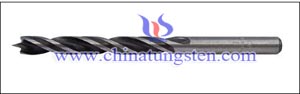
In last part we know that while boring wood, tungsten carbide brad point drill bits can position precisely with its pointed tips, remove chips fast with their wide flutes, and produce accurate and clean-edged holes with the double spurs.This part we will explain further the mechanism of brad point drill bits.
Conventional twist drill bits tend to wander when presented to a flat workpiece. For metalwork, this is countered by drilling a pilot hole with a spotting drill bit. In wood, the tungsten carbide brad point drill bit is another solution: The center of the drill bit is given not the straight chisel of the twist drill bit, but a brad with a sharp point and four sharp corners to cut the wood. The sharp point of the spur simply pushes into the soft wood to keep the drill bit in line.
Metals are typically isotropic, and an ordinary twist drill bit shears the edges of the hole cleanly. Wood drilled across the grain has long strands of wood fiber. These long strands tend to pull out of the wood hole, rather than being cleanly cut at the hole edge. The tungsten carbide brad point drill bit has the outside corner of the cutting edges leading, so that it cuts the periphery of the hole before the inner parts of the cutting edges plane off the base of the hole. By cutting the periphery first, the cutting spurs maximizes the chance that the fibers can be cut cleanly, rather than having them pull messily out of the timber.
(To be continued. This article is divided into 5 parts, and this is part 2. For part 1, please refer to http://news.chinatungsten.com/en/tungsten-information/80396-ti-10360; for part 3, please refer to http://news.chinatungsten.com/en/tungsten-information/80398-ti-10362)
| Tungsten Carbide Supplier: Chinatungsten Online tungsten-carbide.com.cn |
Tel.: 86 592 5129696; Fax: 86 592 5129797;Email: |
| Tungsten News&Tungsten Prices, 3G Version: http://3g.chinatungsten.com | Molybdenum News & Molybdenum Price: http://news.molybdenum.com.cn |
Tungsten Carbide Brad Point Drill BitⅠ
- Category: Tungsten Information
- Published on 16 November 2015
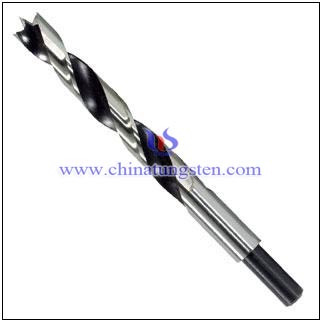
A tungsten carbide brad point bit is designed for boring into wood. It can provide the cleanest, straightest, and most accurately sized hole in wood of any reasonably priced tool on the market today. The brad in the center of the point allows accurate positioning when starting a hole even if the hole is not 90 degrees from the surface. The flutes — grooves that wrap around the bit and channel away chips and dust — are extra-wide to remove more material.The outlining spurs sheer the wood grain and leave a clean edge around the opening of the hole eliminating the need for sanding. The spurs continue to sheer the wood while drilling and produce an accurately sized hole. In most woods, the spurs also help to produce a cleaner edge when drilling through the backside of the wood.
(To be continued. This article is divided into 5 parts, and this is part 1. For part 2, please refer to http://news.chinatungsten.com/en/tungsten-information/80397-ti10361)
| Tungsten Carbide Supplier: Chinatungsten Online tungsten-carbide.com.cn |
Tel.: 86 592 5129696; Fax: 86 592 5129797;Email: |
| Tungsten News&Tungsten Prices, 3G Version: http://3g.chinatungsten.com | Molybdenum News & Molybdenum Price: http://news.molybdenum.com.cn |
The Panzer II Used in the World War II
- Category: Tungsten Information
- Published on 14 November 2015
The Panzer II was the common name for a family of German tanks used in World War II. The official German designation was Panzerkampfwagen II (abbreviated PzKpfw II). Although the vehicle had originally been designed as a stopgap while more advanced tanks were developed, it nonetheless went on to play an important role in the early years of World War II, during the Polish and French campaigns. The Panzer II was the most numerous tanks in the German Panzer divisions beginning with the invasion of France, until it was supplemented by the Panzer III and IV in 1940/41. Afterwards, it was used to great effect as a reconnaissance tank.
The Panzer II was designed before the experience of the Spanish Civil War of 1936-39 showed that shell-proof armor was required for tanks to survive on a modern battlefield. Prior to that, armor was designed to stop machinegun fire and High Explosive shell fragments.
For the fragments, tungsten is a very hard brittle material that melts at over 3400 C. In fact it is virtually impossible to melt tungsten and cast it into precise shapes and it is almost impossible to machine. So tungsten precision parts are made by pressing very pure tungsten powder in very precise molds to shape the various tungsten core so that the resulting shapes don’t need to be machined.
Most tank versions of the Panzer II were armed with a 2 cm KwK 30 55 calibers long cannon. Some later versions used the 2 cm KwK 38 L/55 which was similar. This cannon was based on the 2 cm FlaK 30 anti-aircraft gun, and was capable of firing at a rate of 280 rounds per minute, a very high rate for a tank. The Panzer II also had a 7.92 mm Maschinengewehr 34 machine gun mounted coaxially with the main gun.
The 2 cm cannon proved to be ineffective against many Allied tanks, and experiments were made towards replacing it with a 37 mm cannon, but nothing came of this. Prototypes were built with a 50 mm tank gun, but by then the Panzer II had outlived its usefulness as a tank regardless of armament. Greater success was had by replacing the standard armor-piercing explosive ammunition with tungsten cored solid ammunition, but due to material shortages this ammunition was in chronically short supply.
Compared DU, tungsten has played an integral part of the US nuclear program since the early 1940s. One of the first discussions of the use of tungsten carbide as a tamper for the U-235 gun assembly occurred during mid 1944. A series of reports were produced by Los Alamos on integral experiments that discussed tamper reflection and distributions and tungsten played a key role in those experiments.
| 高比重合金供应商:中钨在线科技有限公司 | 产品详情: http://www.tungsten-alloy.com |
| 电话:0592-5129696 传真:5129797 |
电子邮件: |
| 钨钼文库:http://i.chinatungsten.com | 钨钼图片: http://image.chinatungsten.com |
| 钨新闻3G版:http://3g.chinatungsten.com | 钼业新闻: http://news.molybdenum.com.cn |


Pressing Process Effect on Tungsten Copper Electrode Properties V
- Category: Tungsten Information
- Published on 13 November 2015
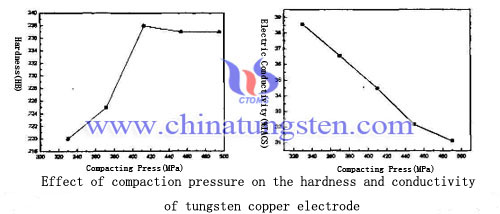
With the increasing compacting press, the electric conductivity of tungsten copper electrode decreases. This is due to the pressing pressure increases, the degree of plastic deformation of tungsten-copper alloy increases, including the increase of crystal defects. These defects regardless of vacancy, dislocation, grain boundaries or lattice distortion, will to some extent hindered the movement of electrons, scattering of electrons increase, which will make the resistivity of tungsten copper alloy electrodes increases the conductivity decreases.
Effect of compaction pressure on the hardness and conductivity of tungsten copper electrode as follow:
| Tungsten Copper Supplier: Chinatungsten Online tungsten-copper.com |
Tel.: 86 592 5129696; Fax: 86 592 5129797;Email: |
| Tungsten News & Prices, 3G Version: http://3g.chinatungsten.com | Molybdenum News & Molybdenum Price: http://news.molybdenum.com.cn |
Tungsten Carbide Tile Drill Bits
- Category: Tungsten Information
- Published on 13 November 2015
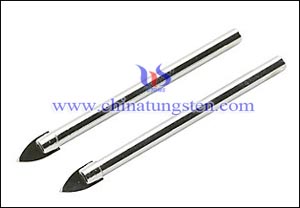
Tile or glass plates are not easy to be drilled through with a hole since the surface of the tiles have a layer of hardened material as tough as glass. An ordinary steel drill bit may fail to penetrate the tile, or cause it to shatter. Glass bits or tile bits are shaped to reduce the risk of shattering brittle materials. These should be carbide-tipped.
A tungsten carbide tile drill bits has a ground tungsten carbide tip and is used for drilling ceramic tiles and glass. The head is usually black in color. It is best to use a variable speed power drill for this bit and generally at a slow speed so that you will not crack or break the glass or tile that you are drilling into.
When drilling into glass, it is best to use a lubricant such as turpentine or white spirit to keep the tip cool and prevent the glass from cracking or breaking. Also, drill at a slow speed into glass.When drilling into a ceramic tile, also drill at a slower speed but no liquid is needed to keep the tip cool.(The End)
| Tungsten Carbide Supplier: Chinatungsten Online tungsten-carbide.com.cn |
Tel.: 86 592 5129696; Fax: 86 592 5129797;Email: |
| Tungsten News&Tungsten Prices, 3G Version: http://3g.chinatungsten.com | Molybdenum News & Molybdenum Price: http://news.molybdenum.com.cn |
Pressing Process Effect on Tungsten Copper Electrode Properties IV
- Category: Tungsten Information
- Published on 13 November 2015
For the effect of compaction pressure of tungsten copper electrode hardness, the pressure is suddenly increased in the beginning, the hardness of tungsten copper electrode can be increased 10-20HB. While when the pressure rises to a certain degree, the hardness is almost unchanged, despite the increasing pressure. As the result of the pressing pressure is relatively small, the powder body is pressed into blank, which decrease the porosity rapidly and improve the density of tungsten copper electrode remarkably. But the contact area among the particles is still small so that strength increase is slower.
When the pressing pressure is greater, the particles can only increase contact area and reduce the porosity by elastic plastic deformation so that the density increases smoothly. However, due to the distance of particles reduce, the contact area increase, interaction force of atoms are emerging, which the strength of the rapidly improved. When the pressing force climb to a certain degree, the density and hardness of pressed compact is maximum, it will not change no matter how the pressure changes.
More information about pressing process effect on tungsten copper electrode properties, click here:
http://news.chinatungsten.com/en/tungsten-information/80252-ti-10309
http://news.chinatungsten.com/en/tungsten-information/80294-ti-10312
http://news.chinatungsten.com/en/tungsten-information/80295-ti-10313
| Tungsten Copper Supplier: Chinatungsten Online tungsten-copper.com | Tel.: 86 592 5129696; Fax: 86 592 5129797;Email: |
| Tungsten News & Prices, 3G Version: http://3g.chinatungsten.com | Molybdenum News & Molybdenum Price: http://news.molybdenum.com.cn |
Tungsten Carbide Wood Working Drill Bits Ⅵ
- Category: Tungsten Information
- Published on 13 November 2015
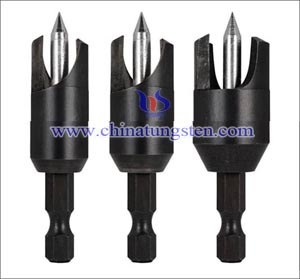
In last part we know that as tungsten carbide wood working drill bits, countersink bits are used to counterbore holes, while bi-metal hole saws have a tungsten carbide edge as well as a diamond one. In this part we go on to introduce more types of wood working drill bits.
10. Plug Cutter
A plug cutter bores holes in wood, creating wood plugs for use in concealing recessed fasteners.When screw holes are drilled with carbide tipped countersink bits, the drilling creates a deeper hole enabling the screw head to be inserted below the surface. This allows a plug to be inserted into the piece and then sanded down creating a flat and clean surface.
11. Step Bit
A step bit is designed primarily for drilling in thin — up to 1/4 inch — metal, but will work with wood. The stepped design allows you to use a single bit to drill holes with different diameters. Often the diameter of each step is etched into the bit. You can also use this type of bit to deburr holes, clearing away waste material.
(The end This article is divided into several parts and this is part 6, for part 5 please refer to http://news.chinatungsten.com/en/tungsten-information/80346-ti-10356)
| Tungsten Carbide Supplier: Chinatungsten Online tungsten-carbide.com.cn |
Tel.: 86 592 5129696; Fax: 86 592 5129797;Email: |
| Tungsten News&Tungsten Prices, 3G Version: http://3g.chinatungsten.com | Molybdenum News & Molybdenum Price: http://news.molybdenum.com.cn |
Tungsten Carbide Wood Working Drill Bits Ⅴ
- Category: Tungsten Information
- Published on 13 November 2015
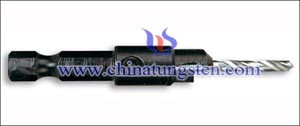
In last part we know that as tungsten carbide wood working drill bits, twist bits have spiral flutes for removal of chips, and a hole saw is used for cutting larger holes with pilot bit for positioning. In this part we go on to introduce more types of wood working drill bits.
8.Bi-metal Hole Saw
A bi-metal hole saw cuts through wood and metal. A hole saw with a tungsten carbide edge works on heavier materials such as ceramic tile and masonry. A hole saw with a diamond edge also works on tile and masonry, but cuts faster than carbide models.
9. Countersink Bit
A countersink bit — also called a screw pilot bit — is a specialty bit for drilling in wood. In a single action, the bit can drill pilot, countersink and counterbore holes, allowing you to countersink a fastener and install a plug over the fastener head.
(To be continued. This article is divided into several parts and this is part 5, for part 4 please refer to http://news.chinatungsten.com/en/tungsten-information/80343-ti-10355; for part 6 please refer to http://news.chinatungsten.com/en/tungsten-information/80349-ti-10357)
| Tungsten Carbide Supplier: Chinatungsten Online tungsten-carbide.com.cn |
Tel.: 86 592 5129696; Fax: 86 592 5129797;Email: |
| Tungsten News&Tungsten Prices, 3G Version: http://3g.chinatungsten.com | Molybdenum News & Molybdenum Price: http://news.molybdenum.com.cn |
Tungsten Carbide Wood Working Drill Bits Ⅳ
- Category: Tungsten Information
- Published on 13 November 2015
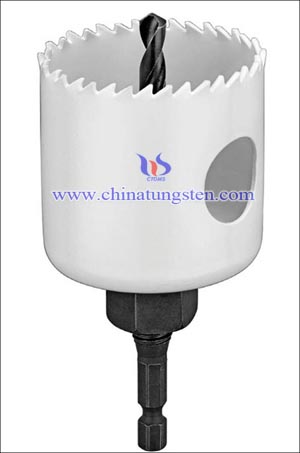
In last part we know that as tungsten carbide wood working drill bits, a spade bit has one or two spade shaped points, while a forstner bit is used to create flat-bottomed holes.In this part we go on to introduce more types of wood working drill bits.
6. Twist Bit
A twist bit is the conventional and most common type of drill bit not only for wood working use at home, but also for many other kinds of work, such as metal machining industry. It works for general-purpose drilling in wood, plastic and light metal. Twist bits have spiral flutes to help remove the wood chips easily.
7. Hole Saw
A hole saw drills large holes — such as for installing door hardware or creating a pass-through for wiring. A hole saw creates a plug of waste material; a cut-out in the side of the saw cylinder allows you to pry it out. Typically a hole saw attaches to an arbor or mandrel which includes a shank. The arbor also holds a pilot bit for centering and steadying the cutting blade. Some smaller hole saws have a built-in shank and don't use a pilot bit.
(To be continued. This article is divided into several parts and this is part 4, for part 3 please refer to http://news.chinatungsten.com/en/tungsten-information/80341-ti-10354; for part 5 please refer to http://news.chinatungsten.com/en/tungsten-information/80346-ti-10356)
| Tungsten Carbide Supplier: Chinatungsten Online tungsten-carbide.com.cn |
Tel.: 86 592 5129696; Fax: 86 592 5129797;Email: |
| Tungsten News&Tungsten Prices, 3G Version: http://3g.chinatungsten.com | Molybdenum News & Molybdenum Price: http://news.molybdenum.com.cn |
Tungsten Carbide Wood Working Drill Bits Ⅲ
- Category: Tungsten Information
- Published on 13 November 2015
In last part we know that as tungsten carbide wood working drill bits, auger bits and self-feed bits all have screw points to position the bits, but auger bits have large flutes to help remove chips, while self-feed bits don’t. In this part we go on to introduce more types of wood working drill bits.
4. Spade Bit
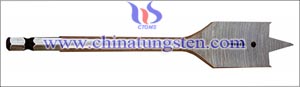
A spade bit bores large-diameter holes — up to 1-1/2 inches in diameter — in wood. It has a flattened blade with a sharp point that helps position and steady the bit. Some spade bits have points at the two edges that help create a neater hole and exit point.
5. Forstner Bit
A forstner bit bores smooth, clean holes in wood. You can use it to create flat-bottomed holes — such as for receiving dowels. If you need to bore through the work piece, it creates a neat exit hole. A point allows you to position the bit precisely on the work piece. Pull the bit out regularly to clear away chips and dust as you work. A hand-held drill typically won't give you the force or control you need to use a forstner bit, so a drill press is a better option.
(To be continued. This article is divided into several parts and this is part 3, for part 2 please refer to http://news.chinatungsten.com/en/tungsten-information/80239-ti-10316; for part 4 please refer to http://news.chinatungsten.com/en/tungsten-information/80343-ti-10355)
| Tungsten Carbide Supplier: Chinatungsten Online tungsten-carbide.com.cn |
Tel.: 86 592 5129696; Fax: 86 592 5129797;Email: |
| Tungsten News&Tungsten Prices, 3G Version: http://3g.chinatungsten.com | Molybdenum News & Molybdenum Price: http://news.molybdenum.com.cn |