Tungsten Copper Sintering Technologies Comparison (1/2)
- Category: Tungsten Information
- Published on 06 April 2016
There are many kinds of tungsten copper sintering technologies, such as conventional infiltration, mixed-pressing, pressure sintering and new SPS (Spark Plasma Sintering), etc, which have their own advantages and disadvantages. Next, we analyze these different sintering technologies by the principle and the applications. First of all, infiltration, which is called melt immersion, is the most widely used in tungsten copper products currently. It is obtained by adding a small amount of tungsten powder or copper powder compacts made of tungsten powder and tungsten and copper infiltrated compacts stacked together, and thereafter sintered at a temperature above the melting point of copper and under reducing atmosphere or vacuum.
In the process of sintering, copper in a molten state to rely on capillary action infiltrated tungsten skeleton, two sintering and infiltration step can also be performed separately. Infiltration has many advantages, such as high density, excellent sintering properties and electrical and thermal conductivity, good arc ablation resistance. But liquid copper barely rely on capillary forces infiltrated tungsten skeleton, this will lead to coarse and uneven distribution of copper particles sintered tungsten particles at high temperatures easily grew up together. In addition, after infiltration machined to remove excess copper and will increase costs and reduce the yield.
Mixed - pressing sintering process is one of the most conventional powder metallurgy, which basic process is preparation →ball milling → compacting →sintering. Sintering can be also divided into two parts, one is solid phase sintering (temperature lower than the melting point of Cu), the other is liquid phase sintering (temperature higher than the melting point of Cu). Since the solid solubility in the liquid phase W Cu is small, the material can not be conveyed by dissolution and precipitation particles rounded manner, and tungsten and copper infiltration is poor, it is difficult to achieve densification.
| Tungsten Copper Supplier: Chinatungsten Online tungsten-copper.com |
Tel.: 86 592 5129696; Fax: 86 592 5129797;Email: |
| Tungsten News & Prices, 3G Version: http://3g.chinatungsten.com | Molybdenum News & Molybdenum Price: http://news.molybdenum.com.cn |
Tungsten Alloy Shielding For Radiation Pasteurization
- Category: Tungsten Information
- Published on 05 April 2016
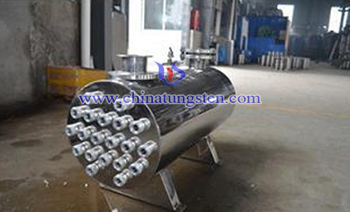
Tungsten alloy shielding for radiation pasteurization is used for shielding the radiation released from the process of radiation pasteurization. Radiation pasteurization is a technology that uses ionizing radiation to kill the causative agent (including virus) to achieve the purpose of toxicity elimination. Its radioactive source is Co60 radioactive source which can release γ rays from a decay. The pests and bacteria hided in the fruits and vegetables would suffer from the physiological function changes and lost the ability to grow and develop after being exposed to these γ rays. So far, radiation pasteurization is widely used for the disinfection of various kinds of medical apparatus and instruments, such as catheters, cannulas, bandages, dressings, suture materials, surgical instruments, injection equipments, blood transfusion equipments, artificial kidney dialyzer, biological tissues for transplantation. It also can be used in pharmaceutical, food, agricultural products and customs, etc.
Co60 is a radioactive isotope of cobalt with a half-life of 5.27 years. Co60 decays by beta decay to the isotope nickel-60. The activated nickel nucleus emits two gamma rays with energies of 1.17 and 1.33 MeV. After entering a living mammal, some of the Co60 are taken up by tissues, mainly the liver, kidneys, and bones, where the prolonged exposure to gamma radiation can cause cancer. Low levels of gamma rays cause a stochastic health risk, which for radiation dose assessment is defined as the probability of cancer induction and genetic damage. High doses produce deterministic effects, which is the severity of acute tissue damage that is certain to happen.
Tungsten alloy shielding for radiation pasteurization is mainly used for shielding the β and γ radiation released from the process of radiation pasteurization. Tungsten alloy shielding mainly uses high gravity alloy which has the characteristics of high density and innocuity. Therefore tungsten alloy shielding for radiation pasteurization has excellent shielding performance to shield the β and γ radiation generated during the process of radiation pasteurization, to avoid resulting in radiation damage. In addition, tungsten alloy shielding for radiation pasteurization is more environmentally friendly than some traditional shielding materials, such as lead, and will not pollute the environment.
| Tungsten Alloy Supplier: Chinatungsten Online www.tungsten-alloy.com |
Tel.: 86 592 5129696; Fax: 86 592 5129797;Email: |
| Tungsten News & Prices, 3G Version: http://3g.chinatungsten.com | Molybdenum News & Molybdenum Price: http://news.molybdenum.com.cn |
Tungsten Alloy Nuclear Radiation Detector
- Category: Tungsten Information
- Published on 05 April 2016
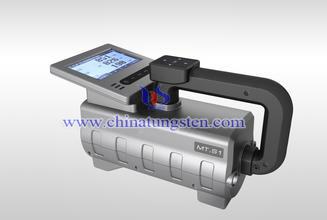
Tungsten alloy nuclear radiation detector, also known as tungsten alloy detecting element, is used to detect nuclear radiation and its properties(including the types, strength ,the energy and nuclear lifetime of nuclear radiation) by utilizing radiation rays to interact with substances to induce a series of effects(such as luminescence phenomenon, ionization effect, physical and chemical changes).It usually made up of a detector, a display unit, a measuring element and a power source, and mainly includes semiconductor detector, gas ionization detector and scintillation detector. Tungsten alloy nuclear radiation detector is widely used in public places, laboratories, quarries, metal processing plants, oil fields and oil pipeline equipment and other departments, for inspection of the radioactivity of underground drill pipe and equipment and building materials, local radiation leakage and contamination and landfill and garbage dump which has the risk of nuclear radiation.
Nuclear radiation, also known as ionization radiation, is a microscopic particle released from the process of a nucleus changes from a structure (or an energy state) to another kind of structure (or another energy state) to cause ionization or excitation material. The types of nuclear radiation include gamma rays, α rays and βrays. Gamma ray is extremely high-frequency electromagnetic radiation and thus consists of high-energy photons. It is penetrating, and can lead to damage at a cellular level, resulting in diffuse damage throughout the body;α rays are generally produced in the process ofα decay. It can enter the body to destroy the human tissues by being inhaled, ingested or injected, αradiation is the most destructive form of ionizing radiation; β rays are able to penetrate living tissues to a certain extent and can change the structure of struck molecules(such as DNA molecules). In most cases, such change can be considered to be damage, with results possibly as severe as cancer or death.
Tungsten alloy nuclear radiation detector uses the tungsten alloy material with high density. Because the radiation shielding capability of a metal material increases with the increasing of its density, so the tungsten alloy nuclear radiation detector has excellent radiation shielding capability. When using a tungsten alloy nuclear radiation detector, the tungsten alloy can absorb and shield the nuclear radiation in a high degree to avoid them doing harm to human body while reaching the goal of nuclear radiation detection.
| Tungsten Alloy Supplier: Chinatungsten Online www.tungsten-alloy.com |
Tel.: 86 592 5129696; Fax: 86 592 5129797;Email: |
| Tungsten News & Prices, 3G Version: http://3g.chinatungsten.com | Molybdenum News & Molybdenum Price: http://news.molybdenum.com.cn |
Tungsten Alloy γ-Ray Level Gage
- Category: Tungsten Information
- Published on 05 April 2016
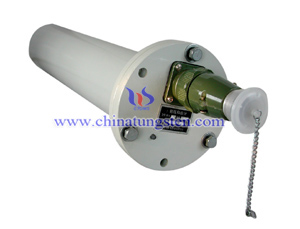
Tungsten alloy γ-ray level gage, also known as tungsten alloy γ-ray content gauge or tungsten alloy γ-ray material level meter, is a measuring instrument for mass level by using its characteristic of the strength of rays suffered by detector is various from the levels. It is also an isotope material level meter. Tungsten alloy γ-ray level gage mainly consists of radiation source, detector and transducer. Generally, the radiation source is Co60 or Cs137 radioactive source contained by tungsten alloy container. The function of detector is to detect the rays, and then change the light signals produced by it into electrical signals. While the electrical signals are transformed into contact signals or standard current signals and output to the DOS and other peripheral equipments by transducer. At present, many advanced tungsten alloy γ-ray level gage collectively call detector and transducer as detector.
Tungsten alloy γ-ray level gage has the characteristic of easy operation, simple structure and high measurement accuracy, is particularly useful for measurement of stuff level in harsh conditions(including high pressure, high temperature, high viscosity, high corrosivity, high toxicity and smoke concentration, boiling conditions)or in complicated conditions where general instruments can't or is difficult to use, or for liquid level measurement in the high pressure container which exists liquid drop and liquid surface fluctuation. The material to be measured can be powder, granular solid or liquid. Tungsten alloy γ-ray level gage is mainly used in papermaking, petrochemical engineering, coal industry, mining, steel, thermal power industry, etc. It is only applies to the measurement of two-phase interface.
Due to theγ rays released from theγ-ray level gage can cause DNA and cellular damage, chromosome aberration, chronic and acute radiation sickness, cancer induced. Theγ-ray level gage usually is tungsten alloy γ-ray level gage whose radiation source container is tungsten alloy container. Tungsten alloy γ-ray level gage has high density and great radiation shielding performance, which make it absorb and shield γ rays in a high degree, reducing the harm on human body, to protect the human from the radiation. Moreover, it is environmentally friendly.
| Tungsten Alloy Supplier: Chinatungsten Online www.tungsten-alloy.com |
Tel.: 86 592 5129696; Fax: 86 592 5129797;Email: |
| Tungsten News & Prices, 3G Version: http://3g.chinatungsten.com | Molybdenum News & Molybdenum Price: http://news.molybdenum.com.cn |
Typical Recovery Process of Waste WO3 Cellular SCR Denitration Catalyst
- Category: Tungsten Information
- Published on 05 April 2016
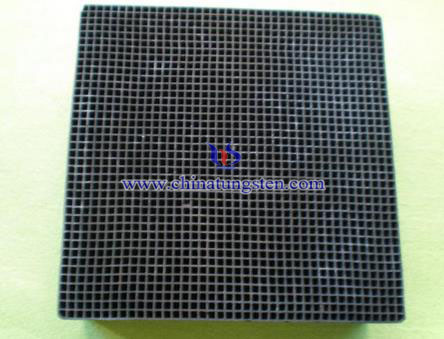
| Tungsten Oxide Supplier: Chinatungsten Online www.tungsten-oxide.com |
Tel.: 86 592 5129696; Fax: 86 592 5129797;Email: |
| Tungsten News & Prices, 3G Version: http://3g.chinatungsten.com | Molybdenum News & Molybdenum Price: http://news.molybdenum.com.cn |
WO3 SCR Waste Denitration Catalyst Recovery Process
- Category: Tungsten Information
- Published on 05 April 2016
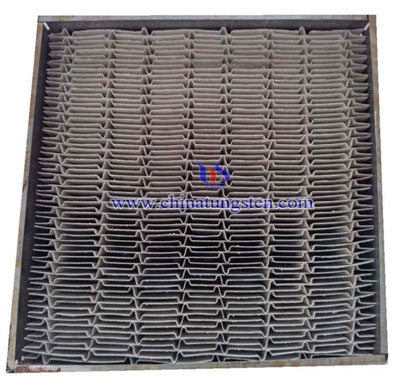
3. Two times of electrolysis with strong electrolyte solution→ adjust pH with ammonium to precipitate vanadium. The industrial application and energy consumption of this process is unknown; besides, W, Ti and other components cannot be separated for recycling.
| Tungsten Oxide Supplier: Chinatungsten Online www.tungsten-oxide.com |
Tel.: 86 592 5129696; Fax: 86 592 5129797;Email: |
| Tungsten News & Prices, 3G Version: http://3g.chinatungsten.com | Molybdenum News & Molybdenum Price: http://news.molybdenum.com.cn |
Shape Influence on CsxWO3 Nanocrystals Surface Plasmon Resonance
- Category: Tungsten Information
- Published on 05 April 2016
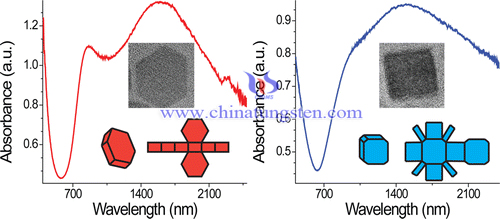
Surface plasmons (SPs) are coherent delocalized electron oscillations that exist at the interface between any two materials where the real part of the dielectric function changes sign across the interface (e.g. a metal-dielectric interface, such as a metal sheet in air). SPs have lower energy than bulk (or volume) plasmons which quantise the longitudinal electron oscillations about positive ion cores within the bulk of an electron gas (or plasma). The charge motion in a surface plasmon always creates electromagnetic fields outside (as well as inside) the metal. The total excitation, including both the charge motion and associated electromagnetic field, is called either a surface plasmon polariton at a planar interface, or a localized surface plasmon for the closed surface of a small particle. The existence of surface plasmons was first predicted in 1957 by Rufus Ritchie. In the following two decades, surface plasmons were extensively studied by many scientists, the foremost of whom were T. Turbadar in the 1950s and 1960s, and Heinz Raether, E. Kretschmann, and A. Otto in the 1960s and 1970s. Information transfer in nanoscale structures, similar to photonics, by means of surface plasmons, is referred to as plasmonics.
Localized surface plasmon resonance phenomena have recently been investigated in unconventional plasmonic materials such as metal oxide and chalcogenide semiconductors doped with high concentrations of free carriers. Synthesize colloidal nanocrystals of CsxWO3, a tungsten bronze in which electronic charge carriers are introduced by interstitial doping. By using varying ratios of oleylamine to oleic acid, synthesize three distinct shapes of these nanocrystals—hexagonal prisms, truncated cubes, and pseudospheres—which exhibit strongly shape-dependent absorption features in the near-infrared region. It's rationalized these differences by noting that lower symmetry shapes correlate with sharper plasmon resonance features and more distinct resonance peaks. The plasmon peak positions also shift systematically with size and with the dielectric constant of the surrounding media, reminiscent of typical properties of plasmonic metal nanoparticles.
| Tungsten Oxide Supplier: Chinatungsten Online www.tungsten-oxide.com |
Tel.: 86 592 5129696; Fax: 86 592 5129797;Email: |
| Tungsten News & Prices, 3G Version: http://3g.chinatungsten.com | Molybdenum News & Molybdenum Price: http://news.molybdenum.com.cn |
CsxWO3 Hydrothermal Synthesis and Near-Infrared Shielding Properties
- Category: Tungsten Information
- Published on 05 April 2016
| Tungsten Oxide Supplier: Chinatungsten Online www.tungsten-oxide.com | Tel.: 86 592 5129696; Fax: 86 592 5129797;Email: |
| Tungsten News & Prices, 3G Version: http://3g.chinatungsten.com | Molybdenum News & Molybdenum Price: http://news.molybdenum.com.cn |
Cerium-Tungsten Trioxide SCR Denitration Catalyst 2/2
- Category: Tungsten Information
- Published on 01 April 2016
| Tungsten Oxide Supplier: Chinatungsten Online www.tungsten-oxide.com |
Tel.: 86 592 5129696; Fax: 86 592 5129797;Email: |
| Tungsten News & Prices, 3G Version: http://3g.chinatungsten.com | Molybdenum News & Molybdenum Price: http://news.molybdenum.com.cn |
Cerium-Tungsten Trioxide SCR Denitration Catalyst 1/2
- Category: Tungsten Information
- Published on 01 April 2016
 From the precious metal catalyst to today widely used SCR denitration catalyst which is using titanium dioxide as the main catalyst carrier, vanadium pentoxide, tungsten trioxide as main active ingredient, the SCR denitration catalyst has experienced a variety of important technological changes and condensed years of hard work from academics and numbers of plant personnel.
| Tungsten Oxide Supplier: Chinatungsten Online www.tungsten-oxide.com |
Tel.: 86 592 5129696; Fax: 86 592 5129797;Email: |
| Tungsten News & Prices, 3G Version: http://3g.chinatungsten.com | Molybdenum News & Molybdenum Price: http://news.molybdenum.com.cn |