Tungsten and Molybdenum Separation – Ion Exchange Method
- Category: Tungsten Information
- Published on Thursday, 06 July 2017 17:28
Tungsten and molybdenum are accompanying elements. Since they are similar in property, it is hard to separate them. Scholars have done a lot of research for tungsten and molybdenum separation, there are several methods developed such as extraction method, precipitation method, ion exchange method.
Ion exchange method principle is sulfurizing sodium tungstate solution containing molybdenum or ammonium tungstate, molybdenum is absorbed on the resin, after tungsten entering exchange solution to realize tungsten and molybdenum separation. The shortcomings include it needs to be processed with oxidized agent, it will waste tungsten and consume a lot of chemicals, also the period is very long.
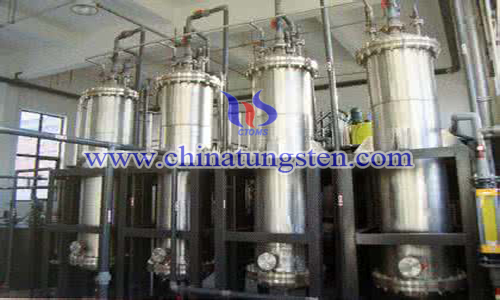
In recent years, research for ion exchange method has yielded fruitful outcomes. In 1994, scholars in Zhongnan University proposed ion exchange method to separate phosphorus, arsenic, silica and molybdenum to obtain pure ammonium tungstate. Its principle is sulfurizing coarse NaWO4 solution, transform MoO42-, AsO43- into MoS42-, AsS43-. After ion exchange, tungsten, molybdenum and arsenic is absorbed on resin and are separated with P and Si, use ammonium mixing solution to desorb tungsten and obtain purified (NH4)2WO4 solution. Then use alkali sodium hypochlorite solution to desorb molybdenum and arsenic to regenerate resin. The process is simple but content of resin exchange is low, when liquid has high contents of molybdenum will be leaked. Hyamine reacts with MoO42- has difficulty of hard desorption, need oxidized agent and high tungsten consuming amount. To avoid these problems, ion exchange equipment is upgraded, exchange volume of resin is increased and improves desorbing effect. The technology has been applied in industrial production.
| Tungsten Supplier: Chinatungsten Online www.chinatungsten.com |
Tel.: 86 592 5129696; Fax: 86 592 5129797;Email: |
| Tungsten News & Prices, 3G Version: http://3g.chinatungsten.com | Molybdenum News & Molybdenum Price: http://news.molybdenum.com.cn |