Tungsten Trioxide Ceramic
- Category: Tungsten Information
- Published on Monday, 04 December 2017 16:56
Tungsten trioxide is also known as yellow tungsten oxide, chemical formula WO3, its density is 7.16 g / cm3; melting point is 1473 °C; boiling point is about 1700 °C.
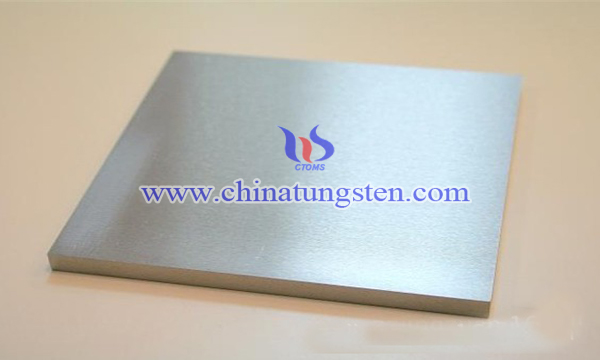
It is mainly used for making high melting point alloy and hard alloy, making tungsten wire and fireproof gas sensitive material, etc., and also used in photocatalyst material. All the characteristics of tungsten trioxide, most people rely on the photoelectric mutagenic properties, the non-linearity and high dielectric constant property can make the nano-sized tungsten trioxide powder burn into functional ceramic and ceramic film such as varistor ceramic, ceramic capacitor, optical (electrochromic) ceramic film, gas sensitive ceramic, it has great application potential in many fields, such as chemical, energy and electric power.
The main raw material of ceramics is compact high pure tungsten powder, therefore, dense and pure tungsten powder 3N above the level of the tungsten oxide ceramic material prepared with better performance, in the past, most of the domestic high performance ceramics required for Japanese imports, the cost is high. With the improvement of China's scientific research strength, tungsten trioxide ceramic gradually realized domestic, thus reducing the price of tungsten trioxide ceramic materials, pave the way for the large-scale application of WO3 ceramics.
Normally sintered WO3 ceramics can exhibit obvious non-linear characteristics, and non-linear behavior of samples quenched at high temperature. The ceramic samples after quenching have been recovered after heat treatment under the condition of oxygen enrichment. The impedance spectrum analysis shows that the grain boundary high resistance layer exists in the ceramic samples with nonlinear nonlinearity, and there is no grain boundary high resistance layer in the sample without nonlinear behavior. Therefore, the grain boundary high resistance layer is the generation and migration of non-equilibrium defects occurring inside and outside the grain during ceramic cooling, and then the high resistivity layer formed on the grain surface under the action of oxygen adsorption. The electron potential barrier is formed in the grain boundary because of the high resistance difference between the inside and outside of the grain. This is the origin of the nonlinear nature of WO3 ceramics.
In summary, WO3 ceramic material has very low breakdown voltage and good dielectric properties, so it is an ideal material for low voltage varistor.
- Tungsten Oxide Manufacturer & Supplier, Chinatungsten Online: www.tungsten-oxide.com
- Tungsten News & Prices of China Tungsten Industry Association: www.ctia.com.cn
- Molybdenum News & Price: news.molybdenum.com.cn
-
Tel.: 86 592 5129696; Fax: 86 592 5129797; Email:
This email address is being protected from spambots. You need JavaScript enabled to view it.