Failure Modes of Tungsten Carbide Cutters Ⅳ
- Category: Tungsten Information
- Published on 14 October 2015
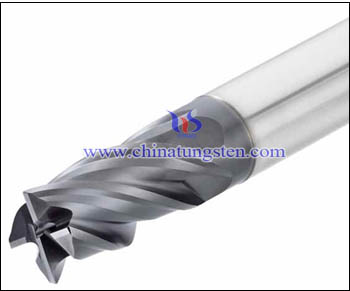
In part 3 we know that chipping/fracturing wear occurs to tungsten carbide cutter components when the service conditions are much tougher than carbide’s tolerance, especially when the cutting edges are unprotected, and so designs need consider to use protective edge chamfers and radii, avoiding sharp inside edges and other stress-inducing features. In this part we will talk about thermal cracking which is also one of the most common failure modes of tungsten carbide cutters.
4. Thermal Cracking
Cemented tungsten carbide cutters have relatively poor thermal shock resistance and sudden changes in temperature often produce failure by thermal cracking. Thermal cracks can result from thermal stresses developed in a single heating-cooling cycle if the temperature change is rapid and significant. These cracks often take the form of a network of fine cracks occurring throughout the bulk of the carbide component and normally result in catastrophic failure. Thermal cracks may also develop gradually over thousands of thermal cycles involving very small changes in temperature. The latter are more localized and typically occur as closely-spaced, radial cracks that extend from edges of the part. As the process progresses these cracks deepen and widen resulting in the spalling away of the carbide located between them.
(To be continued. This article is divided into 9 parts and this is part 4, for part 3 please refer tohttp://news.chinatungsten.com/en/tungsten-information/79331-ti-10139 ; for part 5 please refer tohttp://news.chinatungsten.com/en/tungsten-information/79348-ti-10146)
Tungsten Carbide Manufacturer & Supplier: Chinatungsten Online - http://www.tungsten-carbide.com.cn
Tel.: 86 592 5129696; Fax: 86 592 5129797
Email:
Tungsten & Molybdenum Information Bank: http://i.chinatungsten.com
Tungsten News & Tungsten Prices, 3G Version: http://3g.chinatungsten.com
Molybdenum News & Molybdenum Price: http://news.molybdenum.com.cn
Tungsten Alloy Head Shrapnel
- Category: Tungsten Information
- Published on 13 October 2015
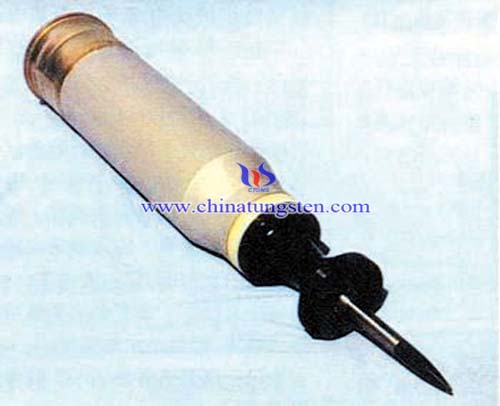
Tungsten alloy has so many properties such as: high density (60% higher than lead and much higher than steel), high radiation resistance, high temperature resistance, small volume and more. As these properties, tungsten alloy is progressively adopted since the raw substance to create components of army products, which include bullet, armor and shells, shrapnel head, grenade, hunting gun, bullet warheads. Head shrapnel relied almost entirely on the shrapnel velocity for head shrapnel lethality. The military use of head shrapnel has been obsolete since the end of World War I for anti-personnel use, when head shrapnel was superseded by high-explosive shells for that role. The functioning and principles behind head shrapnel shells are fundamentally different from high-explosive shell fragmentation.
Tungsten alloy head shrapnel is anti-personnel artillery munitions which carried a large number of individual bullets close to the target and then ejected them to allow head shrapnel to continue along the shell's trajectory and strike the target individually. The high density of tungsten alloy ball makes it possible to significantly reduce the physical size of tungsten alloy head shrapnel components. This in turn, gives the benefit of greater control of weight distribution and increases the sensitivity of controlling mechanisms.
Tungsten Copper Manufacturer & Supplier: Chinatungsten Online - http://www.tungsten-copper.com/
Tel.: 86 592 5129696; Fax: 86 592 5129797
Email:
Tungsten & Molybdenum Information Bank: http://i.chinatungsten.com
Tungsten News & Tungsten Prices, 3G Version: http://3g.chinatungsten.com
Molybdenum News & Molybdenum Price: http://news.molybdenum.com.cn
Tungsten Copper Electrode and Other Materials Comparison IV
- Category: Tungsten Information
- Published on 13 October 2015
Some researchers put graphite electrode into molten metal (such as Cu or Al) in order to improve the properties of graphite electrode in EDM. At the same time, pressing the liquid metal and make Cu or Al fill in the pore of graphite electrode for improving the strength and thermal conductivity of the electrode.
Except graphite, Cu, Cu-based and Cu composite material is also widely used as electrode in EDM, ECM or other machining.
2. Cu, Cu-based and Cu Composite Material
Copper (commonly known as red copper), which is a kind of electrode material, especially in machining non-ferrous metal. Cu has low melting point so that its wastage is high, the lifespan is short and the cost too much, which requires that other material with high melt point to improve its properties.
More information about tungsten copper electrode and other materials comparison, click here:
http://news.chinatungsten.com/en/tungsten-information/79286-ti-10093
http://news.chinatungsten.com/en/tungsten-information/79316-ti-10129
http://news.chinatungsten.com/en/tungsten-information/79338-ti-10130
Tungsten Copper Manufacturer & Supplier: Chinatungsten Online - http://www.tungsten-copper.com/
Tel.: 86 592 5129696; Fax: 86 592 5129797
Email:
Tungsten & Molybdenum Information Bank: http://i.chinatungsten.com
Tungsten News & Tungsten Prices, 3G Version: http://3g.chinatungsten.com
Molybdenum News & Molybdenum Price: http://news.molybdenum.com.cn
Tungsten Copper Electrode and Other Materials Comparison III
- Category: Tungsten Information
- Published on 13 October 2015
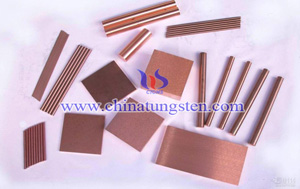
Fine graphite has small grain, porosity and good mechanical strength, which has low wastage of electrode in EDM. But its MRR (Material Removal Rate) is undesirable. At present, the most of graphite grain size is below 10μm, which depends on the conditions electrode works (finishing, semi-finished or roughing) and its shape when we make a choice. In addition, the roughness of work-piece surface is related with the size of graphite grains, the average particle size below 1 μm is specialized for finishing.
Compared with other materials of electrode, graphite can be used in EDM with large discharge current, which remarkably increasing the efficiency. Although graphite has low proportion and price, it is too fragile to machining into the shape of thin. Therefore, it is limited in EDM and researchers find that high speed milling can be improved to some extent.
More information about tungsten copper electrode and other materials comparison, click here:
http://news.chinatungsten.com/en/tungsten-information/79286-ti-10093
http://news.chinatungsten.com/en/tungsten-information/79316-ti-10129
Tungsten Copper Manufacturer & Supplier: Chinatungsten Online - http://www.tungsten-copper.com/
Tel.: 86 592 5129696; Fax: 86 592 5129797
Email:
Tungsten & Molybdenum Information Bank: http://i.chinatungsten.com
Tungsten News & Tungsten Prices, 3G Version: http://3g.chinatungsten.com
Molybdenum News & Molybdenum Price: http://news.molybdenum.com.cn
Failure Modes of Tungsten Carbide Cutters Ⅲ
- Category: Tungsten Information
- Published on 13 October 2015
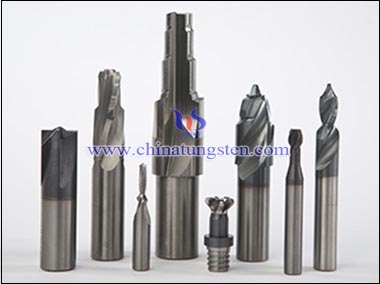
In part 2 we know that corrosion/ leaching wear is one of the most common failure modes of tungsten carbide cutters, while involving only the metallic binder matrix instead of tungsten carbide particles inside, and therefore a moderate or highly corrosive working environment shall be carefully avoided for carbide cutters. In this part we will talk about chipping/fracturing wear as another failure mode.
3. Chipping/Fracturing Wear
Except at relatively high temperatures, tungsten carbides cutters undergo little plastic deformation prior to failing by brittle fracture. Carbide grades vary widely in tensile strength and toughness and premature failure by chipping or fracture occurs whenever the carbide component lacks the toughness to withstand service conditions that include mechanical shock or impact. Sharp, unprotected edges of tungsten carbide cutters are particularly vulnerable to chipping. Cracks generally initiate in areas associated with high stress concentrations and, once moving, propagate rapidly through the carbide component to produce failure by fracture. Carbides have relatively high compressive strengths, however, and any change in either part geometry or operating conditions that converts tensile stresses to compressive stresses reduces the probability of failure by fracture. Design considerations that reduce the risk of failure by chipping or fracture include the use of protective edge chamfers and radii, avoiding sharp inside edges and other stress-inducing features, increasing the wall thickness of tubes and wear sleeves, and improving surface finishes. In certain instances chipping or fracture occurs as a result of the increased stresses associated with a badly worn carbide component. When this is the case, wear is the primary cause of failure even though catastrophic failure by fracture or breakage may mask it.
(To be continued. This article is divided into 9 parts and this is part 3, for part 2 please refer tohttp://news.chinatungsten.com/en/tungsten-information/79330-ti-10138)
Tungsten Carbide Manufacturer & Supplier: Chinatungsten Online - http://www.tungsten-carbide.com.cn
Tel.: 86 592 5129696; Fax: 86 592 5129797
Email:
Tungsten & Molybdenum Information Bank: http://i.chinatungsten.com
Tungsten News & Tungsten Prices, 3G Version: http://3g.chinatungsten.com
Molybdenum News & Molybdenum Price: http://news.molybdenum.com.cn
Failure Modes of Tungsten Carbide CuttersⅡ
- Category: Tungsten Information
- Published on 13 October 2015
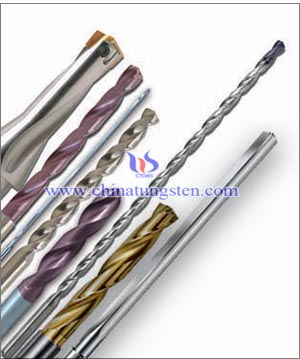
In part 1 we know that tungsten carbide cutters fail in many different modes such as abrasive/erosion wear mode, which means a form of mechanical attack at the working surface of the carbide component and meanwhile not resulting in a total breakdown or stoppage of the operation dependent on the failing component. In this part we will talk about corrosion/leaching wear which is one of the most common failure modes of tungsten carbide cutters.
2. Corrosion/Leaching Wear
Corrosion wear is the result of a chemical or electrochemical reaction between tungsten carbide cutter surfaces and the environment. These reactions generally involve the metallic binder matrix (cobalt or nickel) rather than the tungsten carbide grains and, with the loss of the binder metal at exposed surfaces, the mechanical bond holding the carbide grains in place is also lost. Acidic liquids are particularly corrosive. A cobalt binder is far more susceptible to chemical attack or “leaching” than nickel and should be avoided in moderate to highly corrosive environments. Corrosion rate data for specific situations are seldom available and are typically determined empirically.
(To be continued. This article is divided into 9 parts and this is part 2, for part 1 please refer to http://news.chinatungsten.com/en/tungsten-information/79302-ti-10133; for part 3 please refer tohttp://news.chinatungsten.com/en/tungsten-information/79331-ti-10139)
Tungsten Carbide Manufacturer & Supplier: Chinatungsten Online - http://www.tungsten-carbide.com.cn
Tel.: 86 592 5129696; Fax: 86 592 5129797
Email:
Tungsten & Molybdenum Information Bank: http://i.chinatungsten.com
Tungsten News & Tungsten Prices, 3G Version: http://3g.chinatungsten.com
Molybdenum News & Molybdenum Price: http://news.molybdenum.com.cn
Tungsten Copper Electrode and Other Materials Comparison II
- Category: Tungsten Information
- Published on 12 October 2015
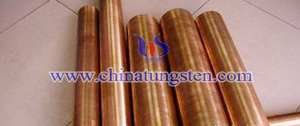
With the development of EDM, the material of electrode and the related manufacture makes a great progress. At present, there are so much electrode materials, such as graphite, tungsten (W), copper (Cu) and some other metal or non-metal elementary substances. In addition, steel, cast steel, Cu-based and W-based composite materials or diamond can be also used as EDM electrode.
1. Graphite
As for the aspect of chemical, graphite is an allotrope of carbon element, which covalently bound covalent molecular bonds. Its has high boiling point and melting point, the melting point up to 3652 ℃, the boiling point of 4827 ℃, insoluble in water. And it also has excellent electrical and thermal conductivity, chemical stability and workability so that it is widely used as EDM electrodes. In addition, graphite also has different kinds, which can be specifically divided by graphite particle density, the size and mechanical and electrical properties.
More information about tungsten copper electrode and other materials comparison, click here:
http://news.chinatungsten.com/en/tungsten-information/79286-ti-10093
Tungsten Copper Manufacturer & Supplier: Chinatungsten Online - http://www.tungsten-copper.com/
Tel.: 86 592 5129696; Fax: 86 592 5129797
Email:
Tungsten & Molybdenum Information Bank: http://i.chinatungsten.com
Tungsten News & Tungsten Prices, 3G Version: http://3g.chinatungsten.com
Molybdenum News & Molybdenum Price: http://news.molybdenum.com.cn
Failure Modes of Tungsten Carbide CuttersⅠ
- Category: Tungsten Information
- Published on 12 October 2015
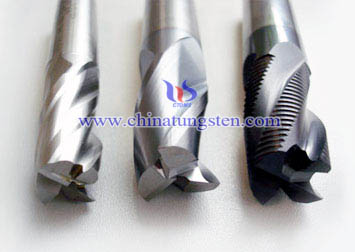
Tungsten carbide cutters fail in a number of different ways. Unfortunately, there is no “one best” grade of carbide for all applications and replacing one grade with another may decrease the probability of one type of failure from occurring, but generally increases the odds that a different one will occur. Carbide grades are normally selected so that the useful life of the cutters and the mode of failure are fairly predictable. In this way unscheduled or disruptive outages of the assemblies which include the carbide component are avoided and the scheduled replacement of parts prior to failure is an option. A brief description of each of the common modes of failure follows.
1. Abrasive /Erosion Wear
Abrasive or erosion wear represents a form of mechanical attack at the working surface of the carbide component. It is the progressive loss of material at the carbide surface due to a high velocity stream of liquid or gas containing solid particles directed into or flowing across the surface of the carbide cutters. It may also result from the sliding or rubbing of a mating component or work material over the carbide cutter surface. The rate of wear depends in part on the force or pressure with which the contact medium impinges on the carbide cutter surface. The progressive wear caused by abrasion or erosion is a preferred mode of failure since it does not result in a total breakdown or stoppage of the operation dependent on the failing component.
(To be continued. This article is divided into 9 parts and this is part 1.)
Tungsten Carbide Manufacturer & Supplier: Chinatungsten Online - http://www.tungsten-carbide.com.cn
Tel.: 86 592 5129696; Fax: 86 592 5129797
Email:
Tungsten & Molybdenum Information Bank: http://i.chinatungsten.com
Tungsten News & Tungsten Prices, 3G Version: http://3g.chinatungsten.com
Molybdenum News & Molybdenum Price: http://news.molybdenum.com.cn
Types of Tungsten Carbide End Mills/Drills and Diagrams Ⅺ
- Category: Tungsten Information
- Published on 12 October 2015
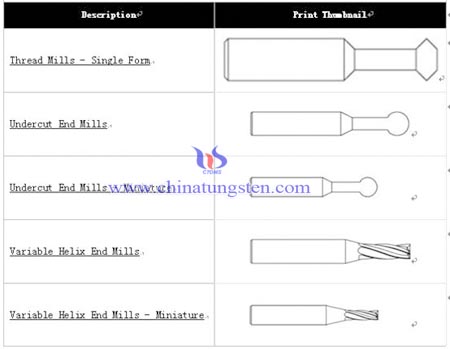
In part 10, we know about Tapered Corner Radius End Mills, Tapered Corner Radius End Mills-Miniature, etc., and here in this part we will go on showing more diagrams of tungsten carbide end mills and drills.
Here we show more types of tungsten carbide end mills/drills, such as Thread Mills-Single Form, Undercut End Mills, etc., each type has different shape and application according to it's own work piece. From the below diagrams with the brief names we can have a direct knowledge on the basic figures and their respective function differentiation.
(The End. This article is divided into 11 parts and this is part 11, for part 10 please refer to:http://news.chinatungsten.com/en/tungsten-information/79274-ti-10127)
Tungsten Carbide Manufacturer & Supplier: Chinatungsten Online - http://www.tungsten-carbide.com.cn
Tel.: 86 592 5129696; Fax: 86 592 5129797
Email:
Tungsten & Molybdenum Information Bank: http://i.chinatungsten.com
Tungsten News & Tungsten Prices, 3G Version: http://3g.chinatungsten.com
Molybdenum News & Molybdenum Price: http://news.molybdenum.com.cn
High Density Tungsten Powder
- Category: Tungsten Information
- Published on 12 October 2015
Tungsten powder now is more and more popular for its high density for many fields as a safe, economical alternative to lead powder.
Its density is in 99% pure high density similar to that of lead powder but with better properties especially its environmental-friendly. Tungsten powder is over 30% heavier than the highest density lead powder and due to the powdery textures ability for compression, can add more weight in less volume. Tungsten powder qualities are fabricated by hydrogen reduction and are available in average particle sizes from 0.1 (100nm) to 100µm, which offers the possibility to produce that of any desired average particle size within various limits only by changes in reduction conditions.
The purity of the tungsten powder is of particular importance in all applications, typical upper limits of foreign element concentrations in µg/g are:
Co, Cu, Mg, Mn, Pb ≤ 2
Al, Fe, Ni, Si, Ca, Cr, Sn ≤10
Mo ≤ 20
The crucial physical properties are average particle size, particle size distribution, apparent, tap and compact or green density, specific surface area, degree of agglomeration and morphology. They are to a certain extent related to each other and can be influenced between limits by the oxide properties and the reduction conditions. Extremely coarse powder gained by screening to separate any finer particles has excellent flow characteristics and is used in plasma spraying.
Tungsten Powder Manufacturer & Supplier: Chinatungsten Online -http://www.tungsten-powder.com/
Tel.: 86 592 5129696; Fax: 86 592 5129797
Email:
Tungsten & Molybdenum Information Bank: http://i.chinatungsten.com
Tungsten News & Tungsten Prices, 3G Version: http://3g.chinatungsten.com
Molybdenum News & Molybdenum Price: http://news.molybdenum.com.cn