RF Magnetron Sputtering
- Category: Tungsten Information
- Published on Wednesday, 16 August 2017 10:59
With excellent performance, zirconium tungstate film gradually becomes the focus of attention. For a period of time, the main methods for the production of zirconium tungstate films are current beam evaporation, powder method and wet chemical method.
However, the above two methods are both unable to meet the needs of large-scale industrial production, either the purity is too low, or the manufacturing is too difficult and the cost is too high. People are looking for a solution that can consider the cost and quality at the same time.
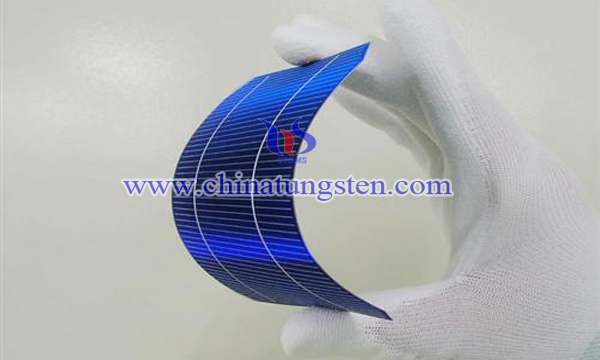
In recent years, Xiao Zhaojuan and other scholars have proposed a method to prepare ZrW2O8 films on quartz substrates and monocrystalline silicon wafers by RF magnetron sputtering. Compared with the old traditional method, it has high rate of sputtering, low substrate temperature, film densification, strong adhesion, large working pressure range, stable deposition rate and so on. As soon as it came out, it has became popular, and gradually replaced the current beam evaporation, powder method and wet chemical method to become the mainstream method of producing zirconium tungstate film at present.
Main preparation processes of RF magnetron sputtering:
1, ZrO2 powders and WO3 powders with purity of 99% are mixed at molar ratio of 1: 2. At the same time, proper amount of water is added. Implanted into the planetary ball, the mixture is added with the right amount of binder. Finally, it is pressed into a thickness of 5mm, diameter of 60 mm block, in the hydraulic machine, burned to 1220 degrees, to make the required ZrW2O8 ceramic target.
2, in vacuum condition, with the quartz substrate and to [100] single crystal Si substrates, 30 min pre sputtering is performed on the sintered ZrW2O8 target surface to remove oxides and other impurities on the surface. Then rotate the base plate and insert the substrate into the glow film.
The zirconium tungstate film prepared by RF magnetron sputtering is amorphous. After 3 min heat treatment at 800℃, the film shows negative expansion characteristics. Compared with the traditional methods, RF magnetron sputtering can control the thickness, flatness and adhesion of zirconium tungstate film by controlling the purity of argon. The cost is also much lower, greatly enhancing the competitiveness of zirconium tungstate thin film.
| Tungsten Supplier: Chinatungsten Online www.chinatungsten.com |
Tel.: 86 592 5129696; Fax: 86 592 5129797;Email: |
| Tungsten News & Prices, 3G Version: http://3g.chinatungsten.com | Molybdenum News & Molybdenum Price: http://news.molybdenum.com.cn |