Depressing Agent of Tungsten Ore - Calgon
- Category: Tungsten Information
- Published on Wednesday, 12 July 2017 18:28
The inhibitor is also called retarder. It is a kind of material that can block or reduce the rate of chemical reaction and having the same usage with anticatalyzer. Depressing agent of tungsten ore is divided into organic and inorganic inhibitors.
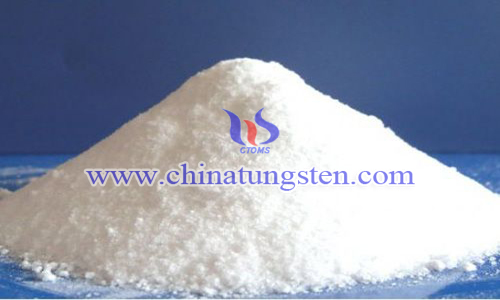
As for inorganic inhibitors, sodium silicate, water glass + metal ions, water glass + ammonium salt, salufer, pyrophosphate, calgon and phosphorous acid are mostly used. Each of them has its advantage. Inorganic depressing agent of tungsten ore – calgon is basically introduced in this part.
Also being called Gelaihanshi Salt or SHMP, its chemical formula is(NaPO3)6 . As a kind of metaphosphate, it is a white and odorless crystalline powder. It is soluble in water and easy to be affected with damp. It will become damp and turn to pyrophosphate after absorbed moisture. Calgon is mainly used in food, as a modified agent, a chelating agent, a fermentation leavening agent or a pH value regulator.
It is worth noticing that six calgon is also a commonly used depressing agent of tungsten ore. We all know that, as an important gangue mineral most oxidized ore, calcite has direct effect onflotation of useful minerals in Flotation. Calgon has a prominent inhibitory effect on calcite, as well as fluorite and garnet.
The working mechanism that calgon has the inhibition of calcite is controversial. Generally there have two statements in previous studies. One is that calgon adsorbed onto the mineral surface, changing the nature of mineral surface to strengthen the hydrophilicity. Thus the collector cannot have an effect on the mineral surface, and the purpose to suppress the effect is achieved. Another one is that calgon is ionized in water. Generated negative ions react with metal ions on mineral surface forming insoluble salt, and then transform into a stable soluble complex, making the active spot of the metal surface dissolve in the pulp. Calgon takes its inhibit effect since the collector hasn’t adsorption point.
In a recent study, researchers of Central South University bring order out of chaos for the above statement. The research shows that calgon does not take its inhibit effect by suppressing the formation of adsorbate in the surface of calcite. It dissolve Ca2+ of calcite’s surface, namely, getting rid of the active spots on calcite surface. As a result, it is difficult for the anionic active group of sodium oleate in the molecular structure to adsorbe on the surface of calcite, and the inhibition of calcite is realized.
| Tungsten Supplier: Chinatungsten Online www.chinatungsten.com |
Tel.: 86 592 5129696; Fax: 86 592 5129797;Email: |
| Tungsten News & Prices, 3G Version: http://3g.chinatungsten.com | Molybdenum News & Molybdenum Price: http://news.molybdenum.com.cn |