Cemented Carbide Degreasing Method - Wiech
- Category: Tungsten Information
- Published on Saturday, 14 October 2017 21:55
Since the emergence of MIM technology, a variety of cemented carbide MIM process paths have been formed with the different binder systems, and degreasing methods have also varied. Wiech was the first one that used in large scale.
The binder used in Wiech is powder injection molding (PIM) system, while the wax based binder system is the most widely used in cemented carbide MIM. After many improvements, the degreasing principle of Wiech method became different, and the degreasing effect and degreasing efficiency also became different.
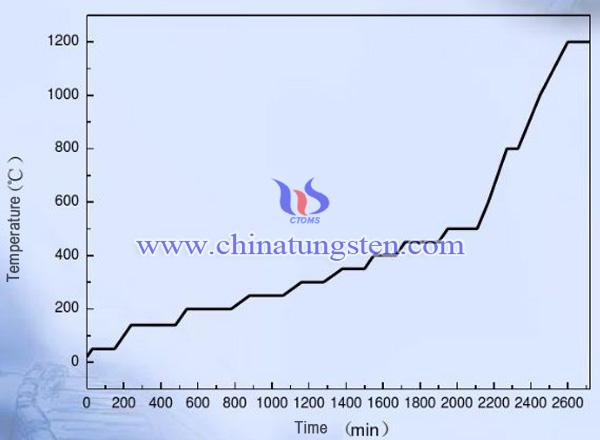
1.Wiech (1)
Basic Process:
1.In the vacuum heating environment, the solvent is dissolved into the forming shell by using gaseous solvent, and the solvent solution of the binder will seep out from the bad formation.
2. The residual binder was removed by solvent degreasing. Because of the pore energy channel formed by gas solvent degreasing, the second step immersion solvent degreasing speed is very fast, and no cracks and defects are produced.
In the gas solvent degreasing period, the cycle is very long, degreasing efficiency is very low. In addition, because of the higher degreasing temperature than the binder flow temperature, the deformation is more serious.
2.Wiech(2)
Basic process: cemented carbide MIM forming blank is placed in an inert gas container. By adjusting the temperature and gas flow rate, the vapor pressure of the binder in the forming blank is higher than that in the container. Then the sample binder can be evaporated from the mold into the container atmosphere.
An independent part of the container is used to condense and collect the binder, and the removal speed of the binder can be controlled by adjusting the condensation speed. For multi component binder, it can also be selectively evaporated gradually by adjusting the temperature and pressure in the container. This process takes about a day or more.
3.Wiech(3)
The MIM hard alloy blank in siphon material, slow heating to 200℃ to remove most of 3H binder, and then forming blank in a hydrogen atmosphere furnace in an atmospheric pressure in at a rate of about 3℃ /min to about 800 DEG C for further degreasing and pre sintering. Whole degreasing process is about 10h.
First, solvent vapor degreasing, followed by evaporation, and then siphon degreasing as the first step, degreasing time was shortened from the initial 3 days to 10 hours. In addition, this method also has the problem that the rainbow response material adheres to the forming blank and the pollution forming blank.
- Tungsten Carbide Manufacturer & Supplier, Chinatungsten Online: tungsten-carbide.com.cn
- Tungsten News & Prices of China Tungsten Industry Association: www.ctia.com.cn
- Molybdenum News & Price: news.molybdenum.com.cn
-
Tel.: 86 592 5129696; Fax: 86 592 5129797; Email:
This email address is being protected from spambots. You need JavaScript enabled to view it.