A Froth Floatation Method Using Low-Tungsten Tin Concentrate to Produce APT
- Category: Tungsten Information
- Published on 26 July 2018
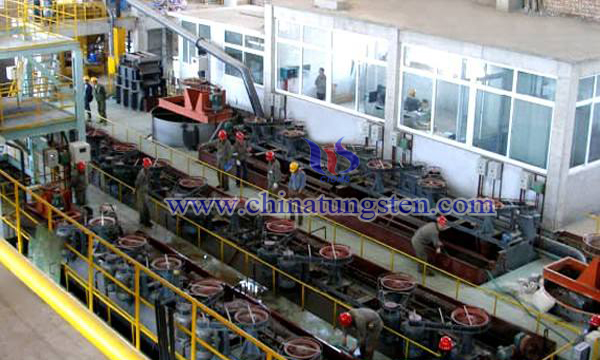
In ore deposits, tungsten is more or less symbiotic with minerals such as tin, copper, antimony, bismuth or molybdenum. Tungsten ore is separated by gravity concentration method, froth flotation method, or gravity concentration-froth flotation process. However, for the associated tungsten in the complex tin concentrate, it is difficult to separate by using the conventional ore separation methods. When the tin concentrate containing ≥1%, the high melting point of tungsten will affect the smelting of tin concentrate.
A Preparation Process of Bismuth Tungstate by Sol-Gel-Hydrothermal Method
- Category: Tungsten Information
- Published on 26 July 2018
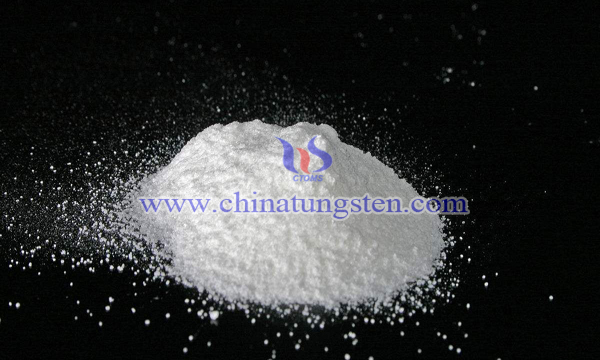
Environmental pollution is a major challenge facing by humans today. The use of photocatalytic technology to control environmental problems is one of the most active research fields. Finding high-efficiency photocatalysts is a top priority in this field. Bismuth tungstate (Bi2WO6) photocatalyst is considered to be a potential excellent visible light catalytic material due to its unique electronic structure, excellent visible light absorption capacity and high organic matter degradation ability.
Recovery Method of Tungsten from Fine-Grained Tungsten Ore Tailings
- Category: Tungsten Information
- Published on 26 July 2018
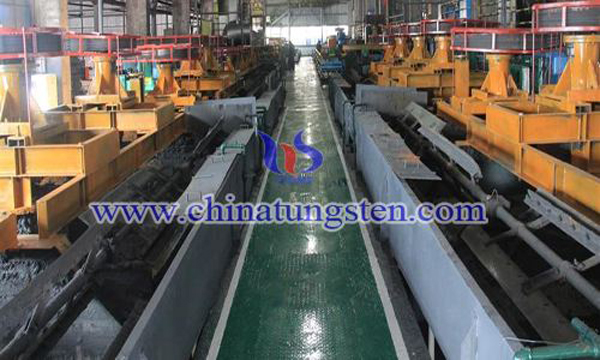
In the association deposit of scheelite and wolframite, the ratio of scheelite to wolframite is 1:9 to 9:1. Although the recovery rate of black and white tungsten mixed flotation has reached more than 80%, the total recovery of tungsten is only about 60%, which is mainly due to the low recovery rate of fine-grained tungsten ore in the separation process of scheelite and wolframite mixed concentrate.
Tungsten in the Steam Turbine Blades
- Category: Tungsten Information
- Published on 26 July 2018
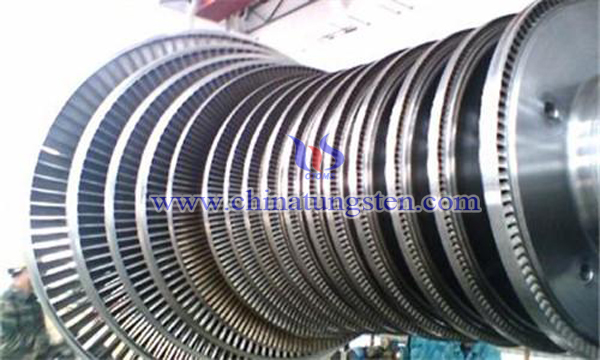
A turbine blade is the essential part in a steam turbine. Turbine blades are subjected to high temperature and high pressure steam, and they are subjected to large bending moments during operation. The moving blades in high speed operation are also subjected to high centrifugal force; the blades in the wet stream areaare subject to electrochemical Corrosion and water droplets impinge on moving blades are also subject to very complex exciting forces. Therefore, the steel for blade should meet the following requirements: high temperature mechanical properties and anti-creep property; high resistance to vibration damping; high structural stability; good corrosion and erosion resistance.
New Production Method for Tungsten-Titanium Target
- Category: Tungsten Information
- Published on 25 July 2018
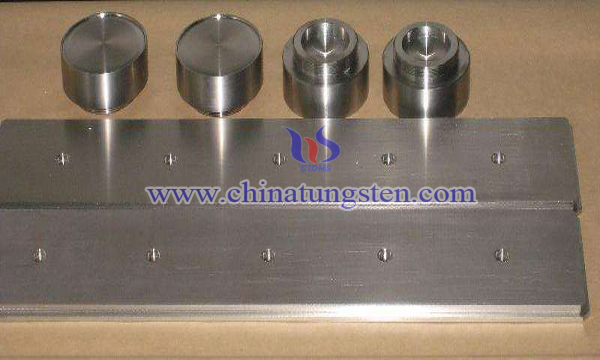
Physical vapor deposition (PVD) is widely used in optical industry, electronic industry, and information industry. The applications of PVD include integrated circuits, liquid crystal displays (LCD), industrial glass, camera lenses, information storage, ships, chemicals, etc. The alloy target used in PVD is one of the most important raw materials in the manufacturing process of integrated circuits and liquid crystal displays.
Production Method of Rotary Target Using Tungsten-Molybdenum Alloy
- Category: Tungsten Information
- Published on 25 July 2018
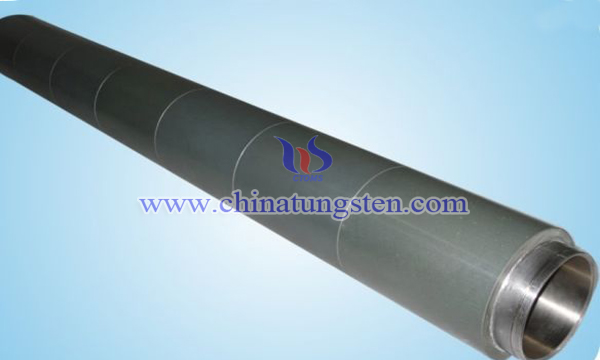
Thin-film-transistor (TFT) film has the advantages of high responsivity, high brightness and high contrast. It is one of the basic materials in many industries. Therefore, it is widely used in the fields of solar cells, liquid crystal displays and plasma displays. In recent years, along with the rapid development of high-end displays, tungsten Molybdenum alloy rotary targets have become an important material for the preparation of TFT films.
High-purity Ammonium Paratungstate Preparation Process
- Category: Tungsten Information
- Published on 25 July 2018
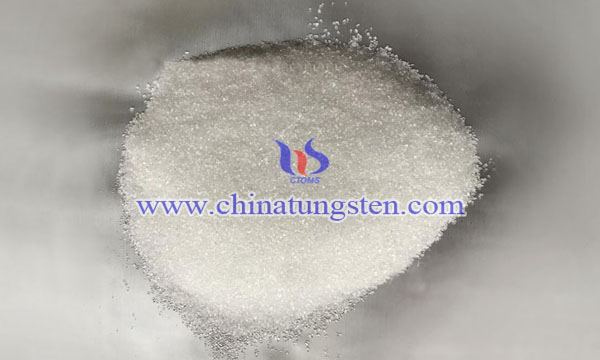
Ammonium paratungstate hydrate is an intermediate for the production of tungsten metal, tungsten-containing catalysts, tungsten-based hard materials (such as tungsten carbide) or sputtering targets. The preparation is carried out mainly by digesting or melting a slag containing tungsten concentrate or tungsten with acid or base, followed by purification, and the purification stage includes a precipitation process and a liquid-liquid extraction. The purified solution is usually concentrated by evaporation to finally crystallize the ammonium paratungstate hydrate.
Preparation Method of Tungsten-Based Tungsten Trioxide Nanofilm
- Category: Tungsten Information
- Published on 25 July 2018
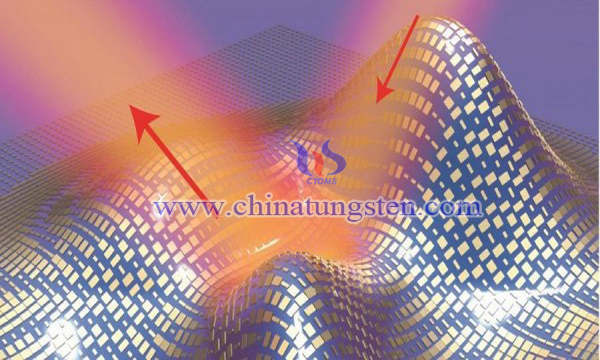
In recent years, research on tungsten trioxide (WO3) nanofilm has attracted more and more attention. WO3 is an n-type semiconductor material with a narrow band gap (2.4-2.8eV), is capable of responding to visible light, and has similar characteristics to TiO2 photocatalyst, namely stable, non-toxic, photo-resistant, low-cost and low-priced. The potential of the belt is high and the photo-generated holes are highly oxidizing.
Preparing Tungsten-Zirconium Alloy with Arc Melting Process
- Category: Tungsten Information
- Published on 25 July 2018
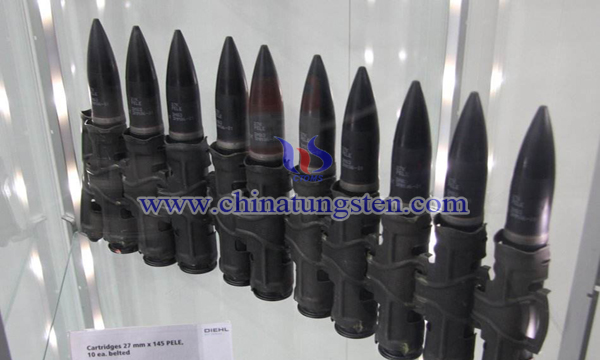
Tungsten is a very important non-ferrous metal. It has the properties of high density and high hardness. It is commonly used in counterweight materials, shielding materials and military materials. Tungsten-zirconium alloy has a broad application prospect in the military field due to its strong resistance to corrosion.
Recovering Vanadium and Tungsten from Vanadium-Titanium-Based Waste Denitration Catalyst
- Category: Tungsten Information
- Published on 25 July 2018
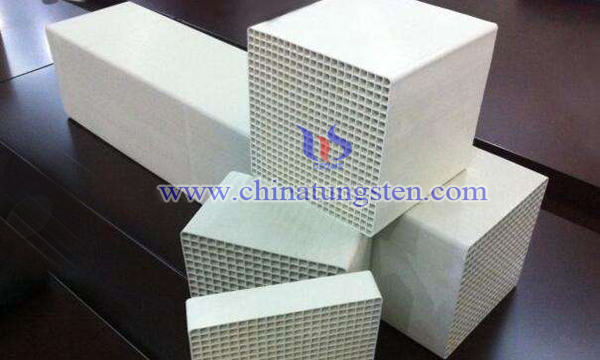
Nitrogen oxides (NOx) are recognized as one of the major sources of atmospheric pollution, including combustion fumes and automobile exhaust. Monolithic vanadium-titanium-based catalysts have been widely used for the removal of NOx from combustion fumes or automobile exhaust, and NOx is removed by selectively catalyzing the reduction of NOx by NH3 to N2. The catalyst uses TiO2 as a carrier (usually 80-90% of the total mass), V2O5 as an active component (1-2%), and WO3 as a co-catalyst (5-10%).