Hydrothermal Synthesis of Tungsten Trioxide Nanosheets
- Category: Tungsten Information
- Published on 25 September 2021
- Hits: 1840
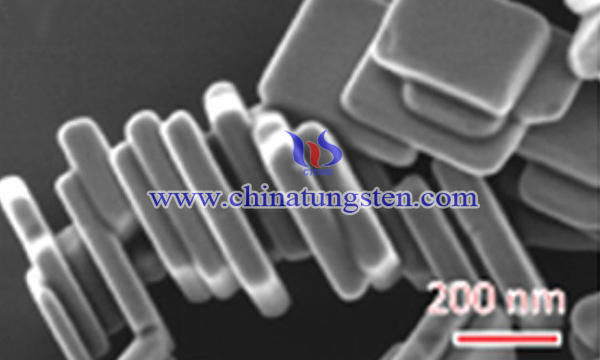
Tungsten oxide nanomaterials have been widely studied due to their excellent gas sensitivity, photocatalysis, electrochromic and other properties. Tungsten trioxide (WO3) with nanostructures is expected to be a candidate material for gas sensors for detecting various gases (NH3, H2S, NO2, CH3OH, etc.). Tungsten oxide nanomaterials with specific size and morphology are synthesized by thermal oxidation method, hydrothermal method, electrochemical anodic oxidation method and other methods. Hydrothermal synthesis specifically shows much more advantages of more effective, low cost, easier to operate and environmentally friendly.
Preparation of Nanosized Tungsten Trioxide by Sol-Gel Method
- Category: Tungsten Information
- Published on 25 September 2021
- Hits: 2065
Tungsten trioxide (WO3) is a non-toxic n-type semiconductor with an indirect and general wide band gap in the range of 2.4-3.6 eV. Therefore, it is an excellent candidate for applications in various fields of industry, medicine, science and military engineering. This effect is due to the unique properties of tungsten oxide nanostructures and their composite materials, such as excellent thermal corrosion resistance and good ductility, high density, strength and elastic modulus, amazing antibacterial activity, and efficient heat and activity Oxygen (ROS) production through light interaction.
WO3 Porous Nanosheet Arrays with Amazing NO2 Gas Sensing Performance
- Category: Tungsten Information
- Published on 24 September 2021
- Hits: 1825

As a typical exhaust gas from industry and automobiles, nitrogen dioxide (NO2) not only causes environmental problems, but also affects the human health. Tungsten trioxide (WO3) is an n-type semiconductor oxide, which has proven to be particularly suitable for detecting NO2 gas.
WO3 Modified TiO2 Nanotube Array for Rhodamine B Degradation
- Category: Tungsten Information
- Published on 24 September 2021
- Hits: 1574
The main source for water and soil pollutions is hazardous colorants in waste water discharged from textile industries. Rhodamine B (RhB) is the most used dye in the textile industries hence it is widely considered as a typical water pollutant. Among the several methods available today, the removal of Rhodamine B dye from the textile waste water via photocatalytic degradation has received much attention from researchers because it can convert the Rhodamine B dye into water, carbon di-oxide and mineral acids without creating secondary pollutants.
WO3 Applied in Dye-Sensitized Solar Cells (DSSCs)
- Category: Tungsten Information
- Published on 23 September 2021
- Hits: 2076
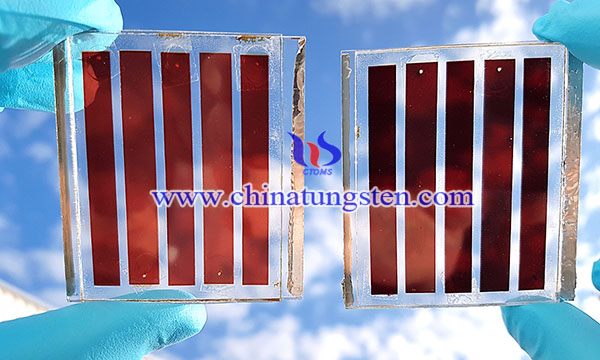
Dye-sensitized solar cell (DSSC) is one of the most popular renewable energy equipment, which has been studied for its light weight, simple manufacturing process, low cost, transparency, good plasticity, and environmental friendliness. The photoanode is one of the main factors affecting the energy conversion efficiency of DSSCs. The efficiency of DSSC-based titanium dioxide (TiO2) is significantly limited by the high interface photogenerated electron-hole recombination rate and the low electron mobility of the TiO2 photoanode.
WO3/SiO2 Catalyst for Aromatic Nitration
- Category: Tungsten Information
- Published on 23 September 2021
- Hits: 1746
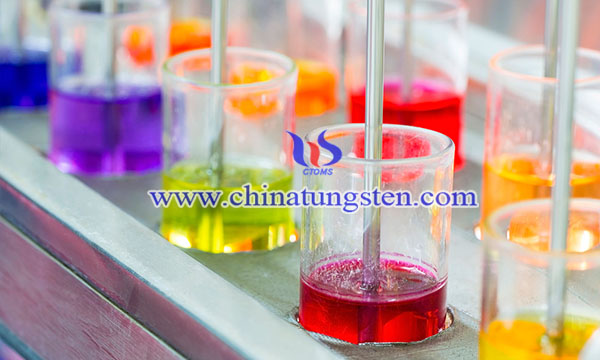
Aromatic nitration has long been an important process in industrial chemistry, because nitroaromatic products are widely used as dyes, pesticides, solvents, drugs, and intermediates for the manufacture of synthetic dyes and other chemicals. Traditionally nitration is carried out by using mixture of concentrated nitric acid (98%) and sulphuric acid in the proportion of 1:2. However the process produces large quantity of dilute sulphuric acid which leads to environmental pollution.
I-P Co-Doped WO3 for Photocatalytic Degradation of Dyeing Wastewater
- Category: Tungsten Information
- Published on 21 September 2021
- Hits: 1576
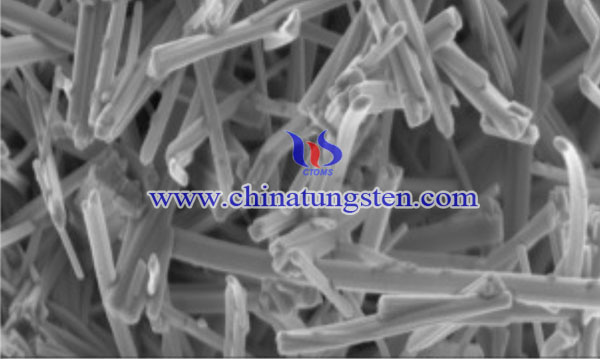
Nearly 20% of water pollution is caused by the leather and textile industries. Textile wastewater contains a lot of organic pollutants, including dyes that are widely used in industry. At the same time, printing and dyeing wastewater has also caused water problems and health problems.
Tungsten Trioxide Doped TiO2 Photocatalysts for Degradation of Diethyl Phthalate
- Category: Tungsten Information
- Published on 21 September 2021
- Hits: 1651
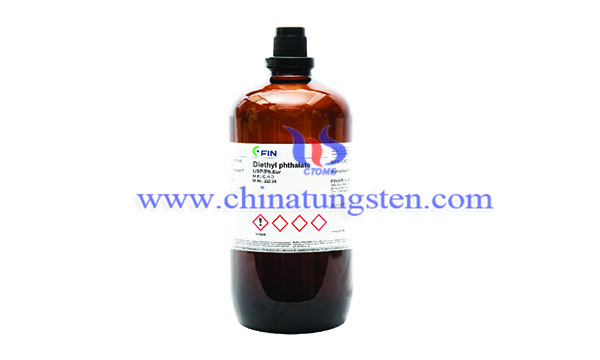
Diethyl phthalate (DEP) is an odorless, colorless, oily liquid. It is used to make plastics, pesticides, cosmetics, and aspirin, as well as toothbrushes, auto parts, toys, tools and food packaging. At the same time, DEP has a negative impact on human health and causes environmental problems.
WO3-TiO2 Photocatalysts with Enhanced Photocatalytic Properties
- Category: Tungsten Information
- Published on 21 September 2021
- Hits: 1442
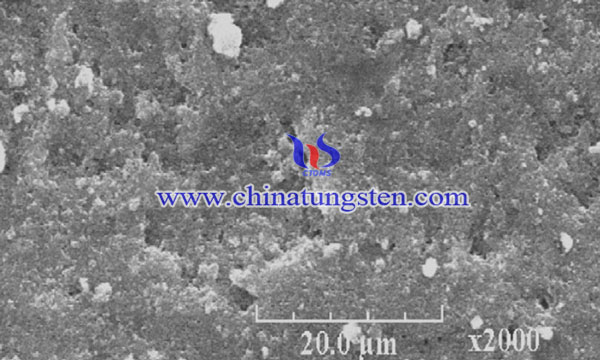
In the past decade, the application of semiconductor powder as a photocatalytic degradation of organic pollutants in water has received widespread attention. Titanium dioxide (TiO2) suppresses amazing photocatalytic properties, including high activity, chemical stability, and low cost. However, the photocatalytic activity of TiO2 (with a band gap of 3.2 eV, excited by photons with a wavelength of less than 387 nm) is still limited by UV wavelength irradiation, so the photocatalytic process cannot effectively occur during sunlight irradiation. 4% of the total solar spectrum radiation is in the ultraviolet region.
Pt/WO3 Films for NO2 Gas Sensing
- Category: Tungsten Information
- Published on 20 September 2021
- Hits: 1815
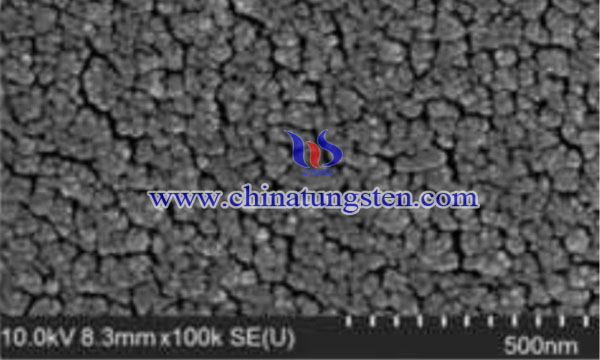
Combustion equipment and automobiles are the major sources of NOx gas including nitrogen dioxide (NO2). These gases have negative effects on the human health and can also cause acid rain. Therefore, effective adsorption materials should be used to sense and detect these gases in the atmosphere.